
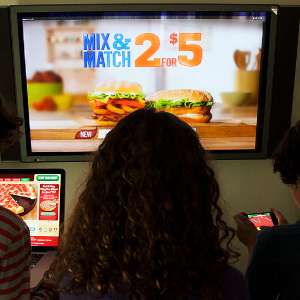
Junk food marketing encompasses all tactics and strategies used by food and beverage companies to promote and advertise unhealthy, highly processed, and nutritionally poor products. Intense market-ing creates a strong desire for junk food…
The Ins and Outs of Junk Food Marketing, and Why It Works
Children and teens are particularly vulnerable to this type of marketing because they often don’t have the cognitive skills needed to understand the intent of junk food adverts. Marketers know this, which is why they often zero down on shaping the new generation of consumers. This led to adopting new approaches and employing new strategies, with fast food restaurants spending over $5 billion on advertising to children and teens in 2019.
As for the strategies, junk food marketing is often shown more frequently around children’s activities, such as prime time for families watching TV, within gaming content, or when watching YouTube. It can include celebrity endorsements, attractive characters, interactive games, and vivid visual elements, making it fun and memorable. Walking through shops, you’ll notice that most junk food is displayed on lower shelves – right at children’s eye level.
As we learn more about various forms of junk food marketing, you’ll discover how ads and strategies have become increasingly sophisticated, attempting to grab the attention and appetites of young consumers.
Traditional Advertising on TV
According to the Kaiser Family Foundation, children and teens aged 8–18 watched an average of 4.5 hours of TV every day for entertainment in 2021. That habit fell by 20% in 2022, reducing TV view-ership among youngsters to 3.5 hours. However, the so-called “family viewing prime time” between 6–9 p.m. still offers plenty of time to advertise junk food to the youngest customers.
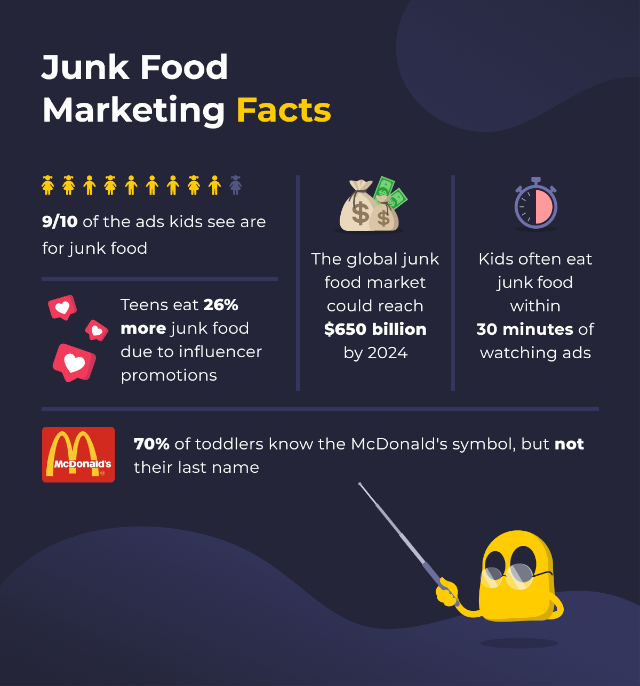
TV ads, with their vivid visuals and catchy tunes, are highly effective at influencing children’s food preferences. Studies show children see about 13 food ads every day, while teens see 16. Only 1 out of 10 of these ads are for healthy foods like fruit and vegetables – the rest are all for junk food. These can come in the form of short ad segments slotted into breaks in favourite shows, but also as pro-duct placement marketing in movies, TV shows, music videos, and other forms of entertainment.
Unlike regular advertising, product placements can make a specific brand part of a story, which makes the products seem more attractive and prestigious. These range from very subtle, like Oreos in Parent Trap, to in-your-face obvious promotions – for example, the whole McDonald’s set in the sec-ond season of Loki. And the recurring presence of Eggo Waffles in Stranger Things. As a result, child-ren feel more inclined to copy whatever their favourite characters are doing, which increases sales and brings in new customers.
Don’t forget Radio
Radio advertising remains a popular junk food marketing medium, too, because it can fill in the gaps when children aren’t watching TV or scrolling social media. This maximizes the reach each brand can get and increases their exposure. It’s especially effective if a junk food company has a catchy jingle, tune, or catchphrase that’s easy to remember and repeat.
Fertile ground…
All these, combined, create a perfect ground for raising a new generation of customers. Consistent exposure to junk food ads, especially from similar brands, also ensures children instantly learn to recognize them in real life. According to a report by Compass, 70% of three-year-olds recognize the McDonald’s symbol, but only half of them know their last name – and that’s just one brand. Studies also show that ads for junk food often increase the number of unhealthy food choices kids make within as little as 30 minutes after watching them.
Tomorrow: Social Media Strategies…
***
Are you enjoying this new series on Junk Food Advertising targeted to kids? It’s a first here on the Fab Food Blog. Let us know what you think. If our faithful readers approve, we’ll bring you more such in-depth reports in the future! ~ Maggie J.
***
This is Part II of a new series – a first for the Fab Food Blog – produced by The Digital Dinner Table, which is solely responsible for all content and opinions expressed.
For information, contact:
Michael Cooper
Digital Literacy & Youth Health Advocate