
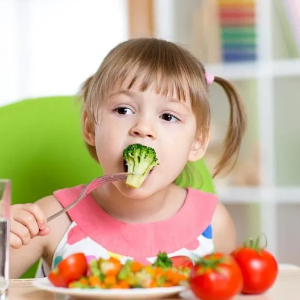
Some dedicated vegans will insist that their dietary choice is best for everyone. And that includes kids. But there’s an ongoing debate about that. Now, after a massive data mining study, researchers say the vegans appear to be right!
 Now researchers say a plant-based (vegan or vegetarian) diet may be just as good
or better for growing kids than a meat-based one – as long as vitamin
and mineral shortfalls are addressed with supplements…
Official nutrition guides, nutritionists and doctors have long warned that a completely meat-free diet is not suitable for active growing children. The issue has been claimed nutrient shortfalls in plant-based diets that hinder early development…
What they did
Researchers from Italy, USA and Australia examined health, growth, and nutritional outcomes in more than 48,000 children and adolescents around the world who followed different eating patterns.
The large-scale meta-analysis reviewed data from 59 studies conducted across 18 countries, making it the most extensive evaluation so far of plant-based diets in children under 18 years of age.
What they found
Surprisingly to some members of the team, vegetarian children were found to consume higher amounts of fiber, iron, folate, vitamin C, and magnesium than omnivorous children. However, they also had lower intakes of energy, protein, fat, vitamin B12, and zinc. Although fewer [of the studies surveyed] focused specifically on vegan children, similar nutritional patterns were observed.
In short, the study found vegetarian and vegan diets can provide many important nutrients and support normal development. At the same time, the analysis highlights a higher risk of nutrient shortfalls when key nutrients are not supplied through fortified foods or supplements. Vitamin B12 and zinc were among the more important nutrients cited.
The takeaway
Despite concerns around nutrient intake, both vegetarian and vegan children showed more favorable cardiovascular health profiles than omnivores. In particular, they had lower levels of total cholesterol and low-density lipoprotein (LDL), often referred to as ‘bad’ cholesterol.
“In conclusion,” says study co-author Dr. Wolfgang Marx, from the Food & Mood Centre at Deakin Uni-versity (Australia), “While well-planned vegetarian and vegan diets are nutritionally adequate and beneficial for adults, there is far less clarity about their suitability for children — leading to incon-sistent or even conflicting advice for parents.”
My take
I’m glad someone finally took the time and made the effort to resolve this nagging debate. And I applaud the caution from the researchers that greater ‘clarity’ is needed about the suitability of vegetarian and vegan diets is needed.
After all… The whole world is headed for plant-based, or largely plant-based diets in the near future, thanks to climate change and unremitting high food prices. So it was an important issue to get out of society’s way…
~ Maggie J.