
The price differentials between regular and Organic foods have slowly but constantly been growing since the Millennium. ‘Organic Premiums’ on some brands have doubled or even tripled. Is there a point where you’ll say, ‘No more!’?
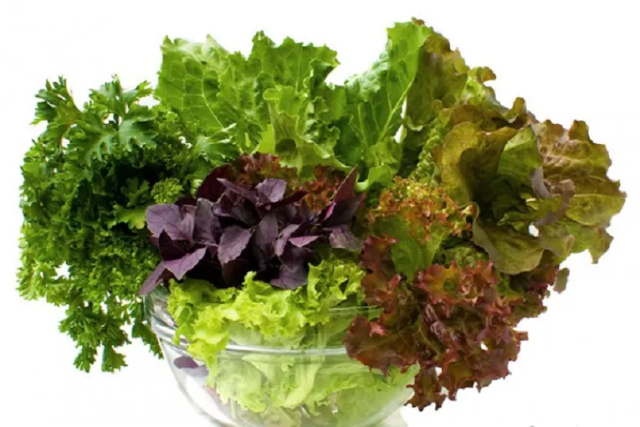 Leafy Greens are the subgroup of the Produce Family in which prices
for Organic varieties have grown most and fastest…
‘A long and winding road’
Specifically, a dirt road, winding through the farming community for the past 100 years…
The Atlantic Canadian Organic Regional Network [ACORN] tells us the ‘Organic’ phenomenon emerged in the 1920’s as a cadre of consumers rose up against,”the introduction of synthetic fertilizers and chemical pesticides [as] staples of industrial agriculture.”
Their core belief was that organically-raised foods, which were not exposed to such synthetic sub-stances were healthier than their commercially-raised counterparts. Though not exactly branded ‘crackpots’, Organic fans faced marginalization and ridicule from many in the majority who viewed the issue as a tempest in a teapot, or a fad.
Over the next 25 years, increased environmental awareness led to consumer demand for food grown in a more sustainable way,” ACORN records. “More farmers started growing ‘organic food’ however, without standards, organic production had no clear definition nor method of regulation.
Better late than never
One reason for the lag in official interest was that the ‘Organic Movement’ remained relatively small. In fact it was not until 1999 that until the first official In 1999, the first Canadian Organic Agriculture standard was published, defining the practices and procedures that organic farmers and processors had to follow to be certified organic.
Certification was initially voluntary. Concern remains that the term ‘organic’ was being used for products that did not adhere to the standards. Only in 2009 did the Canadian Organic Products Regulations came into effect. These regulations are enforced by the Canadian Food Inspection Agency (CFIA). By law, only products produced by a certified organic grower or processor may be labelled as ‘organic’.
Prices always an issue
Retail prices for Organic foods have always been significantly higher than those for conventionally-raised foods that were otherwise identical.
If you study the ‘organic’ regulations, you quickly see why. Not only do the regs mandate that ‘organ-ic’-certified foods may not be treated with synthetic fertilizers or pesticides. They also specify that they have to isolated from other crops that are treated with forbidden substances.Ask any organic farmer. That can be a lot more difficult – and more expensive – to achieve than you might think.
Thus have Organics fans become used to paying premiums of anywhere from 25 to more than 50 percent for foods certified to have been raised according to the official regulations.
Later differentials ‘shocking’
Price premiums on some Organic foods have increased to levels even long-time observers are calling ‘shocking’. Lending Tree, a North Carolina-based online marketplace for loans, broke down the latest data for 68 common organic products…
| Item | Unit | Conventional cost | Organic cost | Premium % |
| Iceberg lettuce | each | $1.21 | $3.38 | 179.3% |
| Brussels sprouts | per pound | $2.20 | $4.99 | 126.8% |
| Granny Smith apples | 2-pound bag | $1.93 | $4.31 | 123.3% |
| Romaine lettuce | each | $1.01 | $2.21 | 118.8% |
| Blackberries | 5.6 to 6-ounce package | $2.48 | $5.37 | 116.5% |
| Gala/Royal Gala apples | 3-pound bag | $2.84 | $5.99 | 110.9% |
| Fuji apples | per pound | $1.29 | $2.62 | 103.1% |
| Vine-ripe tomatoes | per pound | $2.17 | $4.40 | 102.8% |
| Collards | per bunch | $1.10 | $2.22 | 101.8% |
| Sweet potatoes | per pound | $1.10 | $2.15 | 95.5% |
My take
I’ve never worried too much about the ‘Organic’ issue. I guess that’s because I’ve never heard of anybody being harmed in any way by non-organic foods. And my fiscally traditional Scottish Mother has always emphasized the benefits and virtues of living according to proverbs such as ‘A penny saved is a penny earned’, and ‘Waste not, want not’. However…
My questions to you include:
Do you believe that Organic Foods are ‘healthier’ than conventional ones?
Do you believe that Organic Foods are worth paying a premium for?
Is there a point at which you will stop buying Organic Foods because the cost premium has reached an unacceptable level?
Have you already stopped buying ‘Organic’ because the price is already too high?
Muse on that…
~ Maggie J.