

A refreshing take on calorie cutting to lose weight or maintain weight loss makes other approaches seem like overkill. New science suggests we can all encourage our stomachs to crave less ‘stuffing’ just by adding a little spice to our food…
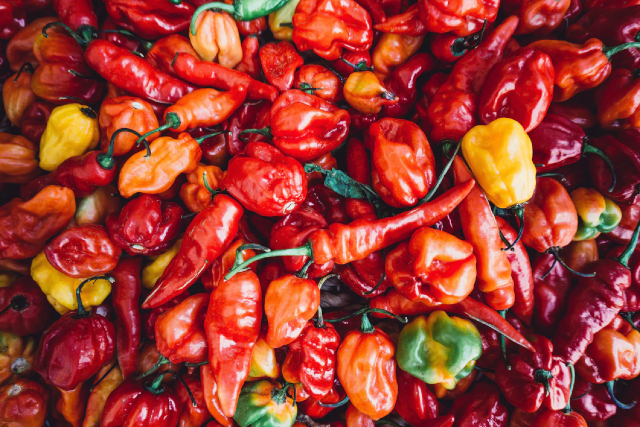
“We know from previous studies that when people slow down, they eat significantly less,” says Paige Cunningham, a postdoctoral researcher and lead author on the study at Penn State.
By simple extrapolation…
“We suspected that making a meal spicier might [help people] slow down,” Cunningham explains. “We thought, let’s test, under controlled experimental conditions in the lab, if adding a small amount of spice, but not so much that the meal is inedible, will make people eat slower and therefore eat less.”
This isn’t the first time we’ve heard of this theory. But it is the first I’ve heard about a controlled, scientific study on it.
What they did
The team conducted three related experiments in a total of 130 adults who were served one of two lunch meals — beef chili or chicken tikka masala — in one of two versions: mild or spicy.
The spiciness level was controlled by carefully varying the ratio of hot versus sweet paprika added to the dishes to vary the heat while keeping chili flavor constant.
Researchers then recorded participants on high-definition video while they ate their meals, to mon-itor their eating behaviors. From the videos, They were able to measure the amount of food and wa-ter consumed, meal duration, eating […] speed, bite rate, and bite size. They also collected ratings on appetite, preference and spiciness before and after the meal.
What they found
The study suggests the reduction in intake is driven by changes in oral processing behaviors.
Specifically, participants ate the spicier meals more slowly. A slower eating rate often means food is in the mouth longer, which can help signal fullness and lead to eating less. Other studies that slow eating rate by manipulating texture have shown similar.
“What’s critical here is that the reduction in intake occurred without negatively impacting how much participants liked the food,” Cunningham says.
Water intake didn’t differ significantly between spicy and mild meals, suggesting that one seemingly obvious explanation – that people drank more water and filled up faster – was not the primary rea-son people ate less.
The takeaway
 “This [all] points to added chilies as a potential stra-tegy for reducing the risk of energy over-consumption,” says John Hayes, a Penn State professor of food sci-ence and Corresponding Author on the study report.
“While portion control wasn’t the explicit goal of this study, our results suggest this might work.” And we’ll be enjoying classic Chili con Carne (left) at our house more often!
The bottom line: “Next time you’re looking to eat a little less, try adding […] chilies, as it may slow you down and help you eat less.”
My take
If it turns out weight loss and maintenance really can be as as simple – and relatively inexpensive – as adding some chilis – several major changes will take place in the obesity ‘space’.
First, the companies currently making money hand-over-fist with GLP-1 meds will go out of business.
Second, many folks will, unfortunately, conveniently forget, or at least downplay, the fact that the real, proven formula for weight loss and control is a combination of calorie control and exercise.
Third, new Mexican and Tex-Mex restaurants will once again sprout from the culinary landscape, in numbers like we haven’t seen since the boom of the 1980s.
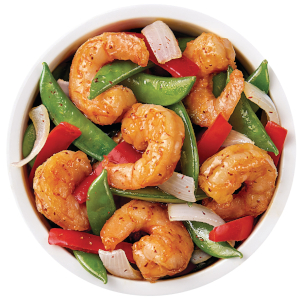 Fourth, if this spicy-themed resto ‘craze’ includes other spicy cuisines, such as Indian and Southeast Asian (for example: Thai Chili Shrimp, photo left), we’ll all be exposed, by coincidence, to a greater number of plant-based dishes. Which is a good thing!
Fifth, two new distinct, parallel ‘channels’ of chili pep-per cuisine will emerge: One classic and authentic, and another in which the median spiciness and chili heat level are considerably lower. Because some folks will eat the chilis not because they like chili peppers that much, but because they ‘work’ for weight control.
Make mine classic Indian Chicken Curry (see photo, top of page) – from the ‘mild’ channel, please. Served on plain, steamed long-grain Jasmine rice!
In short… The potential explosion in chili-based weight control might result in a really exciting, new chapter in the evolution of Western cuisine!
~ Maggie J.