
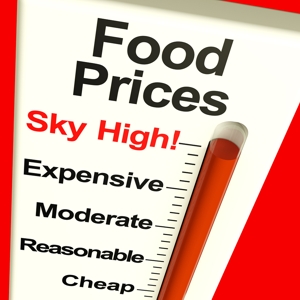
Higher oil prices now, due to Trump’s war on Iran, will trigger higher food prices later this year. And that’s on top of the continued increases due to general inflation and the stress climate change is putting on the entire agriculture sector…
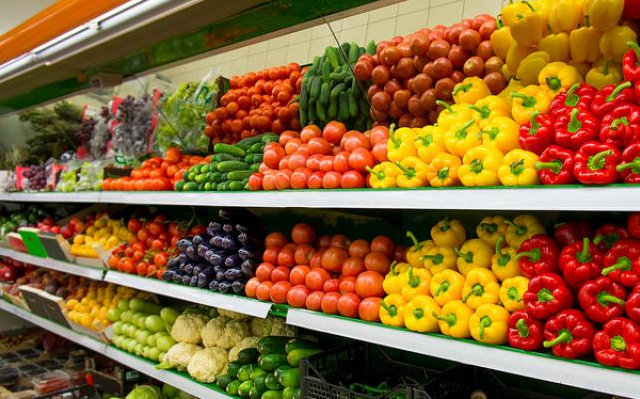
Did you know that the commercial fertilizers used by farmers to produce our food are made from petroleum products? And that’s going to drive up food costs later this year across the Western World. Another component adding to the increases will be rising costs for gasoline and diesel fuel for long-haul transports and local-distribution delivery trucks.
A phased onslaught
Food price increases will come in ‘stages’, agricultural economists warn.
Karl Littler, Senior Vice-President of Public Affairs at the Retail Council of Canada, points out that petro-fuels are used in every stage of food production: planting, harvesting, processing and trans-portation. Costs can be expected to increase accordingly at every stage.
“If the costs go up in the goods themselves, and they will, people are not going to operate at a loss, whether at the farm level or at the processor level or at the grocery store level,” Littler explains.
Michael von Massow, a food economist at the University of Guelph, says Canadians will first see ‘moderate’ price increases for products that come from far away, such as produce from the Southern US, along with South and Central America.
How much?
Transportation prices reportedly account, an average, for 10 to 15 percent of the retail cost of food products. So higher oil prices should result in a 3 to 4 percent rise in supermarket prices for produce, just on that account.
Trevor Tombe, an economist at the University of Calgary, says the end result, for consumers – would be a minimum of about $175 per year, including roughly $120 in grocery costs, he says. And that does not include the inevitable increase in restaurant dining prices.
When?
Tombe notes, there is typically a lag of six to nine months before the full effects reach consumers. It takes time, he says, for increases to filter down to the retail level as warehoused stocks of items made at lower costs run out and products made at higher costs start to ship.
My take
Of greater concern to consumers will be any ongoing increase in gasoline and diesel pries at the pump for their own family vehicles. Canadian gas prices have already risen near $2 per litre in most regions. In the US, there is still fear that they will top $4 per gallon. It will cost more just to go to the supermarket, on top of food price increases.
Increased produce prices aren’t the only issue. Feed for livestock will rise along the same lines, causing commensurate increases in animal protein prices. Stewing Beef is going for $17 lb / $38 kg today at my go-to supermarket. Sirloin Steak is priced at just under $25 lb / $55 kg. Will beef prices hit $75 lb / $165 kg by the end of this year?
My big fear – for the Foodsphere – is that the processors and supermarket chains will use the current economic uncertainty to hike food prices even more than the economists predict, fleecing confused consumers even more than they already do…
The bottom line…
Transportation, fertilizer, and the many other hidden costs of the oil price hike will mean many thousands more Canadians fall below the poverty line. And one of their main challenges will be to put enough decent food on their families’ tables to survive. The Food Banks are already stressed to their limits. There’s a crisis of disaster proportions facing them and their clients in the coming weeks, let alone months…
~ Maggie J.