
‘Value’ and ‘affordability’ are central to Fast Food marketing these days. Now, the concept of afford-ability is rating a higher-profile among grocery retailers, as more and more folks fall below the pov-erty line and malnutrition cases skyrocket.
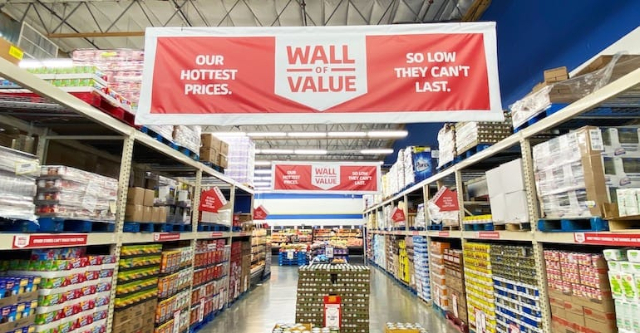 An early tactic in the ‘VALUE’ drive by grocery retailers…
More than just low prices
The VALUE drive by supermarkets started post-COVID, when folks realized food prices that soared during the pandemic crisis weren’t going down again.
Post COVID, high food prices failed to come down again. Inflation had continued high. And in spite of some ‘improvement’ in the rate at which it’s climbing, the inflation rate continues to grow.
Since then. As a result, folks at the bottom of the income ladder are falling farther and farther behind their fiscal responsibilities. They’re making tougher and tougher decisions about which bills to pay and which to let slide. And what kind of food and how much they can afford to put on their dinner tables.
Real consequences
Continuing high food prices are starting to show real, palpable consequences for consumers and so-ciety as a whole. Recently, a consortium of regional Pubic Health Agencies in Southwestern Ontario issued a warning to governments at all levels that food prices must come down or people will start starving. The ‘meat’ of their warning was that all 4 of the agencies, serving millions of Ontario resid-ents, are seeing a huge increase in malnutrition-related conditions an diseases among low income families.
In starker terms: People are starving.
The VALUE Era
Grocery retailers are seeing some real consequences at their level, as well. They know many folks have less and less to spend on groceries, and are looking elsewhere – to other retailers – for price relief.
The result in-store is that retailers are revamping their approach to the products they offer and the way they structure the price ‘tiers’ within their inventories…
ACOSTA lays it out
Market research form ACOSTA has just issued a new report looking at he whole broader issue of af-fordability ion the grocery sector.
“Despite meaningful gains in grocery purchasing power since 2023,” the preamble to the latest Afford-ability Tracker Report states, “consumers continue to prioritize value, engage with promotions and scrutinize purchases more carefully than before the inflationary period.”
That’s just a genteel, academic way of saying that food has become a little bit more affordable over-all. But folks are still having trouble affording what they need to fill-up themselves and their families in a healthy way.
The State of the Grocery Sector
The Report’s Executive Summary lays it on the line:
“A routine grocery stock-up trip now costs more than $366. In the comparable four-week period of 2020, that same basket cost approximately $288. [That] reflects one of the most significant periods of grocery inflation in recent history and helps explain why affordability remains a defining concern for consumers, retailers and brands alike.
“For many households, however, grocery shopping does not exist in isolation. Housing, health care, insurance and other essential expenses continue placing significant pressure on household budgets, making affordability […] a daily concern.”
One point the Report underlines is, though grocery affordability has increasesd slightly, statistically, folks have less money overall to spend on food because other costs have continue to increase. Cur-rent retailer responses to the demand for better food value are not meeting consumer demands. Shoppers are still making their grocery purchasing decisions as though they were still in the midst of the peak inflation period of 2020 – to 2023.
What the Report recommends…
“The central implication is straightforward but significant. Improving affordability does not appear to be reversing the shopping behaviors consumers developed during the inflationary period. For retail-ers and brands, that means future growth may depend less on waiting for economic conditions to normalize and more on understanding how permanently consumer expectations around value have changed.”
Therefore grocery retailers have to look at new ways of making their pricing decisions, including:
Redefining Value: Shoppers weigh quality, freshness, and brand trust alongside low prices rather than focusing strictly on rock-bottom costs.
Private Label Growth: Supermarkets expand high-margin, high-quality store-brand alternatives to give budget-pressed shoppers relief without sacrificing satisfaction.
Format Evolution: Traditional grocers blend everyday low pricing (EDLP) and targeted promotions to defend market share against aggressive discount chains.
My take
I realize that the ACOSTA Report is intended for the eyes of the grocery retail community. But I can’t, for the life of me, see much in it for the average consumer.
It appears that top-level initiatives such as the recently-announced Canadian Government inquiry into competition in the Food Sector are going to be the only way to significantly lower food prices for millions of folks who are now, literally, facing starvation.
~ Maggie J.