

Friday, we re-introduced the oft-pooh-poohed notion that a mass switch from fresh to frozen produce could help reduce the mammoth pro-blem of global food waste. Without sacrificing flavour, aesthetics or nutrition. While saving precious cash… So why haven’t we?
 Who would have thought something so simple could be so
good – for us and the climate – in virtually all respects?
Today, as promised, we present Part II : The proposed mass segue to modern deep-frozen foods, and away from often wasteful, costlier fresh produce and canned goods…
Enter, the home ‘deep freezer’…
To truly preserve foods at low temperatures, you have to freeze them quickly and hold them at tem-peratures not just below the freezing point of water, but down around minus 18 C / 0 F.
That helps minimize loss of moisture due to what is commonly known as ‘freezer burn’, and slows the oxidation that robs long-preserved foods of their enticing colours, flavours and volatile nutrients.
The logistics angle
The freezer compartment in the average kitchen fridge can’t reach, much less maintain such low temperatures. Which is why the home freezer became so popular in the 1960s and 70s. Not to men-tion the advantage of large storage capacity. Chest freezers of 21 cu. ft. / just under 600 litres capacity were not uncommon early on in the game.
In keeping with that ‘reality’, it was also common for folks to buy sides or quarters of beef and have them custom cut and wrapped for the freezer, where they could hibernate safely for half a year or more. That saved a pile of money – over the planned span of the storage period – and ensured that folks had access to the cuts of meat they preferred. Rather than relying on the meat cutters at the butcher shop or supermarket to provide them. What a difference from the situation we have to put up with at the ‘meat counter’ today!
Other considerations
If you had a deep freeze, you could also take advantage of other foods – ‘flash frozen’ in season, when they were cheapest, most plentiful and most nutritious – ‘at the peak of ripeness’, as they used to say. That goes even more so today, thanks to advances along the way in freezing methods and pack-aging techniques for frozen foods. Notable among those, the advent of the ‘zipper’ resealable storage bag.
Reduced waste
Another major consideration in favour of freezing fresh produce is the fact that the stuff in the bag is 100 usable. No trimmings, stems, ‘outer leaves’, peelings or unwanted ‘top greens’ to worry about. Or pay for, only to throw them – and the money they represent – away during meal prep.
Snelling’s focal point
Prof. Snelling focuses on the waste issue – something that’s been worrying climate and sustainability activists, and economists for more than a decade, now. ‘Waste’, as a general consideration and world-wide danger, is coming to a head as we speak.
‘At the most recent United Nations General Assembly meeting, President Philemon Yang told attend-ees that up to 1.2 billion people could be displaced by rising sea levels driven by global climate change,” Snelling reports. “To stave off that worst-case scenario, the UN is working to achieve global net-zero carbon emissions by 2050.”
“To meet that goal, the world must find ways to reduce greenhouse gas emissions from food pro-duction, the second leading cause of greenhouse gas emissions,” she continues. “Addressing food waste is a ripe opportunity for significantly addressing climate change on a consumer and industry level.”
My take
According to most recent surveys and projections, Snelling says, “More than 30 percent of food in the United States is wasted. And, when it comes to produce such as fruits and vegetables, that number reaches 40 percent or more. That’s an alarming statistic, particularly when we know food insecurity afflicts over 40 million people across the US, alone.
Double whammy…
“This is an even greater concern because virtually all food waste ends up in landfills where it emits methane, a greenhouse gas that’s more potent than food [based] carbon dioxide,” Snelling reveals.
Freezing a win-win…
“Frozen produce could play an important role in helping consumers cut food waste at home. Con-sumers don’t need to sacrifice quality or flavor,” Snelling sums up. “Frozen vegetables also have a longer shelf life — depending on the product — lasting longer than refrigerated or fresh foods (some items for up to six months). That means fewer leftovers and less spoilage.”
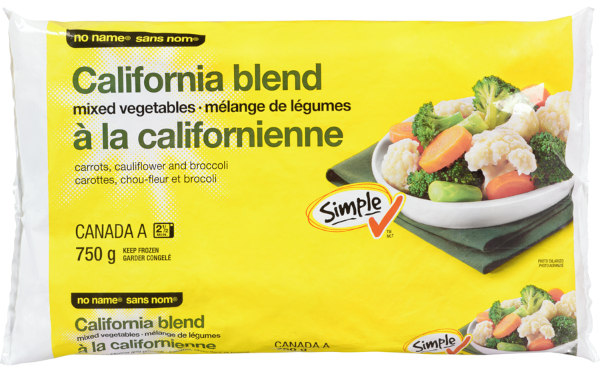
Today, we can all just go to the supermarket and grab a bag of frozen produce (most kinds, anyway; some stuff just doesn’t freeze!) when we need it. Best to leave the long-term storage of deep-frozen foods to the pros. And it’s inherent in the process that foods frozen ‘in season’ present the most consistent, lowest retail prices over their storage lives.
We dare you…
If you doubt Snelling’s comments and claims about the flavour, colour and texture of modern commercially-frozen foods… Just grab a bag of frozen green peas and another of sweet corn kernels next time you’re at the supermarket.
You’ll discover that new freezing processes ensure foods no longer clump up in icy balls after the bag has been opened. And that their freshness – in all respects – is more or less guaranteed….
~ Maggie J.