
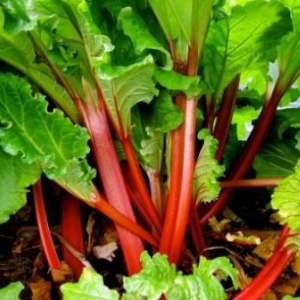
We’ve talked about Turmeric being a healing substance. Now, there’s another – very different – com-mon plant that’s being touted as its equal. Their ability to neutralize so-called Super Bugs could place them in the forefront of antibiotic research…
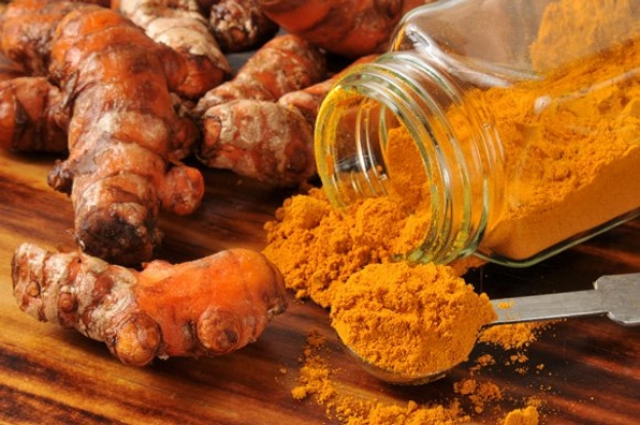 Turmeric: This therapeutic root known since ancient times
could prove a weapon against so-called Super Bugs.
Turmeric and – wait for it – Rhubarb have been found to contain powerful biologics that attacked bacteria previously considered immune to existing antibiotics.
What they were doing…
Researchers at Utah State University were studying possible new ways to purify waste water – a problem that grows with the population. Their targets were bacteria that could not be killed by conventional antibiotics; so-called Super Bugs.
Their motivation
The opening statement of the study report sets the scene: “The development and spread of anti-biotic resistance in wastewater pose significant threats to both the environment and public health.”
The World Health Organization (WHO) has declared the situation a ‘silent pandemic‘. Common infect-ions which previously gave way to conventional treatments are increasingly proving resistant to ex-isting antibiotics.
In its latest Global Antimicrobial Resistance and Use Surveillance System (GLASS) report, WHO found that roughly 1 in 3 infections reported in Southeast Asia and the Eastern Mediterranean regions were resistant to commonly used antibiotics. In Africa, the number was 1 in 5. “Antimicrobial resistance is outpacing advances in modern medicine, threatening the health of families worldwide,” WHO Director General Tedros Adhanom Ghebreyesus said in a statement attached to the report.
Their plan
Study first author Dr. Liyuan ‘Joanna’ Hou, an environmental microbiologist, said in a statement: “Our goal was to isolate and characterize multidrug-resistant bacteria, explore the molecular mechanisms of resistance, […] and assess the potential of natural compounds as alternative mitigation strategies.”
Hou and her colleagues experimented on samples from a wastewater treatment plant in Logan, Utah. In the lab, they isolated bacteria from the samples and tested their resistance to sulfamethoxazole, a commonly used antibiotic. The team then selected the four most-resistant bacterial strains and test-ed them against 11 plant-derived compounds previously reported to have antimicrobial or antibio-film properties.
What they found
Out of an extensive panel of plant-derived compounds, the team discovered that curcumin (from Turmeric) and emodin (from rhubarb) had the greatest potential as weapons against Super Bugs.
The takeaway
“While natural compounds like curcumin and emodin show promise in inhibiting certain multidrug-resistant bacteria, further research is needed,” Hou said.
“Future work should include testing these compounds in complex wastewater matrices, exploring synergistic effects with existing treatment processes, and assessing long-term impacts on microbial communities and resistance dynamics. Additionally, scaling up from laboratory studies to pilot-scale trials will be critical for evaluating feasibility and environmental safety.”
My take
“These compounds were chosen based on their reported antimicrobial or anti-biofilm properties in previous studies,” Hou noted. “[…]and their natural abundance, making them promising candidates for exploring new, environmentally friendly approaches to mitigate resistance.”
What more could you ask for? Hou makes no small point that the ability of circumin and emodin to treat infections in humans is still a fair way off from even testing, much less coming into clinical use.
And to ‘commercialize’ waste water treatment with these compounds would require further testing to determine appropriate concentrations, environmental safety, cost, and compatibility with existing wastewater treatment technologies.
But the study findings are certainly encouraging!
~ Maggie J.