
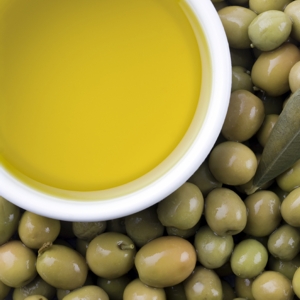
We thought we had fats figured out. But now researchers say they’ve peeled back another layer of the onion and found something entirely unsuspected. A ‘good’ fat found in Olive Oil that may actually have the power to make us obese…

It’s not as simple as that, but that’s what it boils own to. Seems the kind of fat we consume is just as important as how much fat we consume…
What they did
“We know that the types of fat that people eat have changed during the obesity epidemic,” says Michael Rudolph, PhD, assistant professor of biochemistry and physiology at the University of Oklahoma College of Medicine. “We wanted to know whether simply overeating a diet rich in fat causes obesity, or whether the composition of these fatty acids that make up the oils in the diet is important. Do specific fat molecules trigger responses in the cells?”
What they found
Rudolph and his team fed mice a variety of specialized diets enriched in specific individual fatty acids, including those found in coconut oil, peanut oil, milk, lard and soybean oil.
They found that oleic acid was the only one that caused fat cells to proliferate more than other fatty acids.
The takeaway
“You can think of the fat cells as an army,” Rudolph said. “When you give oleic acid, it initially increases the number of ‘fat cell soldiers’ in the army, which creates a larger capacity to store excess dietary nutrients. Over time, if the excess nutrients overtake the number of fat cells, obesity can occur, which can then lead to cardiovascular disease or diabetes if not controlled.”
The trouble with controlling the intake of oleic acid is, it’s found in so many foods that are otherwise considered ‘healthy’, and are recognised as good sources of a multitude of essential nutrients. In fact, oleic acid is commonly found in such universally lauded foods as olive oil.
“I think the take-home message is moderation and to consume fats from a variety of different sources,” Rudolph says. “Relatively balanced levels of oleic acid seem to be beneficial, but higher and prolonged levels may be detrimental. If someone is at risk for heart disease, high levels of oleic acid may not be a good idea.”
My take
As in so many other aspects of human existence, common sense prevails. The word ‘moderation’ crops up again as the universal guideline. ‘Variety’ and ‘balance’, come in close behind.
Let that be the overriding message to us all – especially those who tend seek specific answers to general questions…
~ Maggie J.