

I was aware of many of the nutrition-dense plant products that most of us just throw away. Or – more properly – toss in the compost bin. But I was totally in the dark about a couple more named in a UK-sourced article…
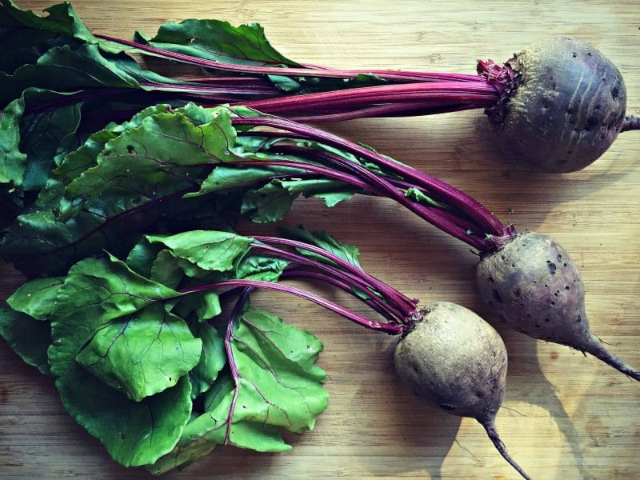 You can eat both the root and leaves of the common Red Beet. The leaves
can add beautiful colour, deep umami flavour, and earthy
body to your soups, stews and sauces!
I have to admit, I’ve often shown let my smug side show when telling folks they should be leaving the peels on their potatoes. And eating them. I’ve also taken secret pleasure in chiding folks for ‘wasting’ their carrot tops and the dandelions on their front lawns. But even I didn’t know about a couple of even-more-obscure waste-fighting tastes we could all do well to acquire.
Not a new ‘thing’
Only the foods are new. The practice of folding into our meals parts of them we usually toss is truly ancient. But then, again… As recent as the Great Depression.
I learned about thrift and using every usable part of various foods from my Mom. She learned from her Mom, who was a young farm mom during the Depression. My day’s Mom was a town girl, but she planted fruit trees in the backyard, kept chickens for both eggs and meat, and taught my Dad to raise rabbits. The family’s kitchen garden was totally self-sustaining. Granny even grew some ‘crops’ her family didn’t like. She knew neighbours who did like them, and traded for stuff they grew but she didn’t.
We’re not quite in as deep as those times in our current era of widespread food insufficiency. But it seems as though it’s high time we hauled out the old steamer trunk and pulled up some thrift tips from which we could all benefit.
Here we go…
Save those egg shells!
Google AI has searched the Web and gleaned these valuable carry-on applications for egg shells:
- Fertilizer: Crush or grind dry eggshells and mix them into soil to add calcium, which helps prevent blossom end rot in tomatoes and peppers.
- Pest Control: Sprinkle crushed, sharp-edged shells around plants to deter slugs, snails, and beetles.
- Seed Starters: Use half-shells as small, biodegradable planters for seedlings.
- Compost: Add crushed shells to your compost pile to add calcium and minerals.
- Feed Birds/Chickens: Bake shells at 350°F (175°C) for 10-15 minutes, crush them, and add to bird feeders or chicken feed for extra calcium.
Egg shells can also be applied directly to your diet:
- Reduce Coffee Bitterness: Add crushed eggshells to coffee grounds before brewing to reduce bit-terness in the final product.
- Calcium Powder: Boil shells to sterilize, bake at 350°F for 5 – 8 minutes until brittle, and grind into a fine powder to add to smoothies or food.
- Skin Care: Add crushed shells to apple cider vinegar to soothe minor skin irritations.
Peels are appealing!
Potato and carrot peels are both high and diverse in nutrient value. Carrot peels can be puréed and added to any tomato-based sauce or dish. Leave the peels on potatoes to add not only nutrition but subtle umami flavour to dishes.
Apples, plums, pears and many other tree fruits can be eaten skin-on. Again, as my Mom’s Mom used to say, “If you throw away the peel, you’re throwing away the best part!”
The Brit post also mentions Kiwi(!) as a fruit whose skin is edible and harbours the major share of its nutritional components.
Parsnip and Beetroot peelings can also be eaten. But like carrot peels, you’ll probably want to cam-ouflage them. Parsnips peels should be used in cooked applications to bring out their unique umami-swetness.
Stocks and stems…
You toss whole herbs into dishes. Why not keep stems from herbs such as Rosemary that you’ve stripped of the best part, and toss them in dishes where a little Rosemary would be a good thing? The green stems, to which the ‘buds’ attach, are best in this application.
Don’t throw away garlic leaves. Think of them as bigger, stronger-tasting chives!
I cherish the tip I was gifted y a Jamaican friend who I met at the supermarket. She saw me picking pover the Cliuantro in the wyhole herbs section. She said, “Oh! Those look really nice!” I off handedly grumbled, “Yes, but they’ve got the roots on. I’ll just have to throw those away…” “NOOO!” she howled. “They’re the best part!” The part Latonya and her kin use to add flavour and zing to Caribbean dishes. Asian cooks, on the other hand, use Coriander – the seeds of the same plant – extensively across their broad and varied cuisines. You can’t make a curry without Coriander!
Asparagus and broccoli stalks can be used in a variety of dishes. They’re particularly useful in sauces, where they’ll be puréed, and as additions to the stock pot. They’re full of nutritious contributions and deliver a deep but subtle umami dimension to the brew.
Don’t leave the leaves
All kinds of veggie leaves are perfectly edible and most deliver loads of nutrition and flavour. We’ve already mentioned carrot tops and dandelions. But have you considered adding broccoli, turnip or beet greens to your diet? They’re great in soups and stews. And you can improve the ‘consumer appeal’ of spinach or kale by sautéing them with some of these lesser-appeciated cousins.
I’m not a huge fan of greens for greens’ sake. But Asian cooks love them. And I’ve found that studying Asian recipes that feature greens can help a lot in choosing complementary sauces and spices that will make take your greens to a whole new level.
The Pesto ‘hack’
Here’s another ‘hack’ you can use to use up parts of plant foods you might otherwise waste. It lever-ages the univerally-useful technique of puréeing. And it can make a delicious difference in some foods you already know and love.
I call it The Pesto Hack, because Pesto – as a concept, not a specific recipe – is the original appli-cation I used it in. But you can apply the Pesto Hack to many sauces, soups and stews.
So many of the plant parts that are too strongly flavoured or too tough or too stringy to eat by them-selves (in any recognizable form) can be puréed into Pesto to add flavour, umami and depth. I’ve just recently learned that newstalgized Pestos don’t even have to include basil!
The possibilities are almost endless…
My take
I still have a considerable amount of experimentation to do over my Pesto Hack journey. I’ll post the Best of My Best when I declare an end to the quest.
Meanwhile… I do hope the foregoing suggestions and revelations will spur you to try new parts of familiar veggies – and maybe even improve your health while giving your food budget a break!
~ Maggie J.