
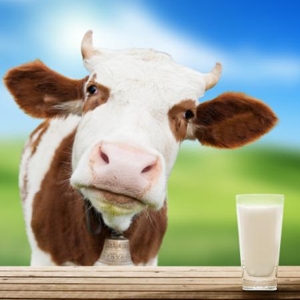
At least, that’s what researchers who’ve developed a milk ‘manufacturing’ technique in the lab are predicting. If it’s viable – and scalable – there could be major implications for the environment. Land and water use in particular!
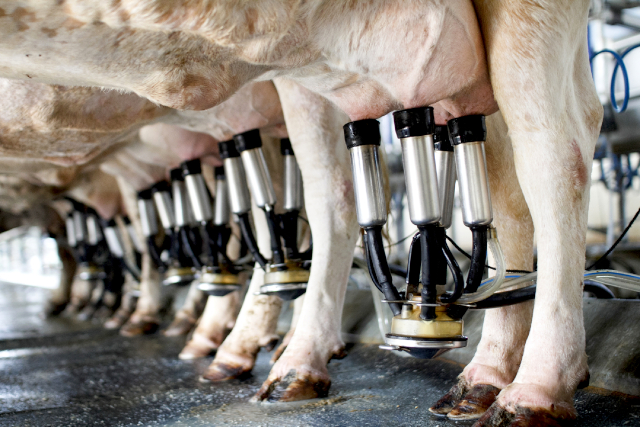 The traditional barn full of cows and complex milking machines could become
relics of the past if a new ‘precision fermentation’ process developed by
by a team at Imperial College London (UK) comes to fruition…
We already make beer, wine and other alcoholic beverages via controlled fermentation processes. Other such formulae result in cheese, yogurt, sour cream and a variety of other dairy products found worldwide…
The first thing…
… Most of us have to get over is the erroneous belief that ‘fermentation’ always results in ethyl alco-hol. The word actually refers to a type of chemical reaction in which bacteria ‘digest’ suitable ‘feed’ materials into other forms. In cheese making, for example, the cheese is separated from the whey. Which, though a byproduct, is in demand as a livestock feed, and can be processed further to extract whey protein.
Fermentation is already big business, and proven hardware already exists to scale-up any new pro-cess to commercial productio0n volumes.
What they did
The Imperial College team has developed a genetically-engineered strain of yeast that can, via care-ful fermentation, produce the same proteins found in cow’s milk. They can be blended with fats and sugars to create a product that is bioidentical to ‘natural’ cow’s milk.
But a Food & Wine story notes, “Precision fermentation milk lacks the saturated fat found in whole cow’s milk, meaning it wouldn’t be a good one-for-one swap for things like cheese or butter.
What it means for the Earth
Almost half of all habitable land on Earth is used for agriculture, and most of that is dominated by livestock farming, which not only monopolizes land, but has numerous negative impacts on the environment,” Science Alerts reports.
“Yet, despite the size and environmental burden of animal farms, animal agriculture, including dairy production, only provides about 17 percent of global calories consumed and just one-third of the protein we eat.”
However…
What will the dairy farmers do?
It’s been suggested that they turn to growing plant-based crops to feed the giant new milk ferment-ation system. That won’t be an easy sell. True, most dairy farmers already grow plant-based foods for their herds. But they would probably make significantly less money growing plants, alone. Then, there’s their investment in equipment and livestock…
On the up side, some dairying practitioners will survive, as producers of high-value, ‘real’ cow’s milk – for those who willing to pay boutique prices…
What about lactose allergies?
Good news on the lactose front! the new, cow-free milk will contain no lactose at all. That alone will save the world billions a year in the cost of diagnosing and treating the lactose intolerant, and those who are actually allergic.
What about the cholesterol?
The new milk will also contain no cholesterol. But that’s not really a concern, sine science has, since the COVID Crisis, exonerated dietary cholesterol of its former reputation as a driver of blood chol-esterol levels. A 2022 study published in the learned journal Nutrients found, “there is not a direct correlation between cholesterol intake and blood cholesterol.”
Nevertheless, I suspect there are still millions of folks out there who doubt the science (largely because they don’t understand it), who will be relieved by the absence of cholesterol.
My take
I see few drawbacks to the advent of cow-free milk – except for one elephant in the barn: genetic modification. But I also predict hat genetically-modified foods – already becoming more common in our supermarkets – will overwhelm the fears and suspicions of the masses in time – as we are forced to rely more and more on plant-based foods to survive the implacable onslaught of climate change.
~ Maggie J.