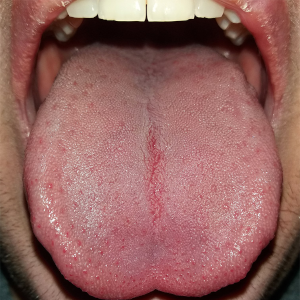
I am one of the many COVID victims whose sense of taste was impaired by the infection. But I was lucky. My senses of taste and smell both returned to full function. There are others, however, whose sense of taste may have been permanently impaired…
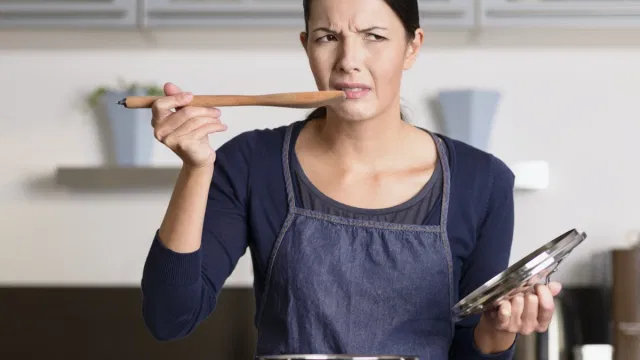 A whole host of everyday activities are affected if you can’t taste clearly…
A significant number of COVID sufferers reported that their senses of taste and smell were impaired. Or completely wiped out by the infection. There’s a clinical name for the affliction: Angeusia. But the causes are poorly understood. Put that together with a loss of your sense of smell (Anosmia) and you get a complex that could put you off food altogether.
What happened?
Researchers reporting in the clinical journal Chemical Senses found there was a simple, but vexing condition at the root of the problem.
The team closely examined 28 subjects who had been officially diagnosed with the virus, but not hos-pitalized. All reported having some degree or range of taste impairment which lasted for at least a year after they were pronounced recovered.
What they found
- Eight of the 28 patients had ‘clearly’ abnormal taste test scores
- Eleven patients reported specific taste losses, including sweet, bitter, or umami flavours.
- Across the 28-patient panel, salty and sour tastes were ‘largely preserved’
Why?
Biopsies of the tongues of all participants were microscopically examined to determine what, if any irregularities were present. And, if any, could they account for the loss of sensation?
The researchers found that the taste bud cells of 20 of the patients studied has abnormally low levels of ‘messenger RNA’ (MRNA), a substance which is necessary to transmit taste signals to the brain. Specifically, the signals for registering sweet, bitter and umami (savour) tastes.
“[MRNA] acts like a molecular amplifier inside taste cells,” says Dr Thomas Finger, a professor of cell and developmental biology at the University of Colorado Anschutz and the study’s corresponding author. “It strengthens the signal before it’s transmitted to the brain. When levels are reduced, the taste signal weakens.”
The other basic tastes – sour and salt – rely on different signalling mechanisms.
Good news and bad news
The good news…
… Is that we now know what’s going on.
“Some subjects had normal-looking taste buds, while others showed structural disorganization,” Finger observes. “This suggests that both molecular and architectural changes may contribute to persistent taste dysfunction.”
Those folks may experience some or all of the following:
- Foods taste dull, muted, or just ‘off’
- You can’t pick up certain flavors, especially sweet, bitter, or savory (umami)
- Salty or sour foods still come through more clearly
- Your sense of smell is also reduced or distorted
- These changes have lasted for months after a COVID infection
The bad news…
There’s not much science can do (at present) for those with damaged taste buds…
My take
I can foresee – perhaps in a relatively distant future – such a development as taste bud transplants. Or rejuvenation processes for one’s own damaged taste buds. I wasn’t able to find any reference to researchers working on such projects at this time. And it’s a crying shame. Literally. I have a friend who does occasionally break down when unable to taste a dish she’s been especially craving.
Nevertheless… Now that hard evidence has been nailed down identifying the cause of the lingering taste and small impairment some COVID sufferers are experiencing, there’s at least hope for the future…
~ Maggie J.