
I don’t believe in ‘magic bullets’ or ‘on/off switches’. But… Many of history’s greatest discoveries do seem to have been made at the same time, in different places, for different reasons…

Neither do I believe in coincidences. Though I do believe – as others have observed – that many of history’s greatest discoveries have been made more or less at the same moment, in widely separated geographical locations. Evolution. Calculus. Powered flight. The telephone. There’s even an official name for it: Multiple discovery.
So it may be with multiple purported biological ‘switches’ reported this same week by researchers in widely separated locations, but all pertaining to turning on or off hunger or cravings ‘signals’.
Rutgers ‘owns’ cravings
At least, that what the team there says in its report on a new study of, “a tug-of-war inside the brain between hunger and satiety, revealing two newly mapped neural circuits that battle over when to eat and when to stop.”
Competing voices…
Two new studies from Rutgers Health researchers suggest there two competing ‘voices in the brain: one urging another bite, the other signaling ‘enough’. These ‘circuits’ apparently operate by stimu-lating or suppressing the same type of receptors that respond to similar signals from presence or absence of GLP-1 in the weight loss and maintenance mechanism governed by new drugs such as Ozempic.
Together, the papers, in Nature Metabolism and Nature Communications, trace the first complemen-tary wiring diagram of hunger and satiety in ways that could refine today’s blockbuster weight-loss drugs and blunt their side effects, the preamble to a third-party abstract reveal.
Complementary symmetry…
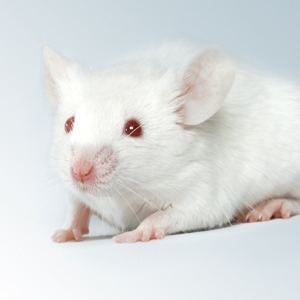
One study says a new brain circuit running from the hypothalamus to the brainstem can turn cravings on or off, dramatically alternating the behaviour of specially-bred lab mice.
A second, independent team traced other circuit from the stria terminalis to similar cells in the later-al hypothalamus. This one governs hunger.
Meanwhile…
A team at the Max Planc Institute for Biology and Ageing have discovered a direct connection be-tween the smell of food and feelings of fullness, at least in lean mice.
Curiously, obese people appear to have a malfunction in this mechanism.
Uniquely, the nerve cells reporting hunger signals to the brain activate upon smelling food, leading to a reduced appetite. But they are inhibited once eating begins.
Direct correlation to humans
According to an abstract of this study’s final report… The human brain contains the same group of nerve cells as the mouse, but it is not yet known whether they also respond to food odours. However, the researchers were reassured in their results by independent studies by other research groups that have shown smelling some specific odors before a meal can reduce people’s appetites.
The takeaway…
“Our findings highlight how crucial it is to consider the sense of smell in appetite regulation and in the development of obesity,” says Sophie Steculorum, the head of the study. “Our study shows how much our daily […] eating habits are influenced by the smell of food. […] Our study opens up a new way to help prevent overeating in obesity.”
My take
Given the already-known details of the so-called GLP-1 receptor mechanism in connection with appetite stimulation and suppression, and the previous independent studies showing the asso-ciation between food aromas and appetite, it makes sense that all of the studies previewed in this post have yielded up their respective, complementary results at about the same moment in history, and all are reporting virtually simultaneously.
Maybe not an amazing coincidence – but certainly an elegant convergence that underscores the notion that all the discoveries represented in these independent efforts were ‘meant to be’ – and add up to a total greater than the simple sum of the parts…
~ Maggie J.