
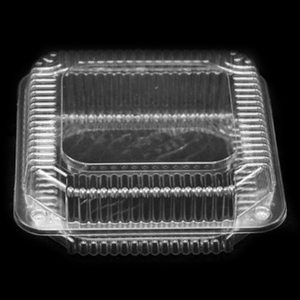
“Too good to be true?” That was my initial reaction when I read the preamble to a recent scientific report that announces the discovery of a new class of bioplastics which seems to address all the evils of petro-plastics – and more!
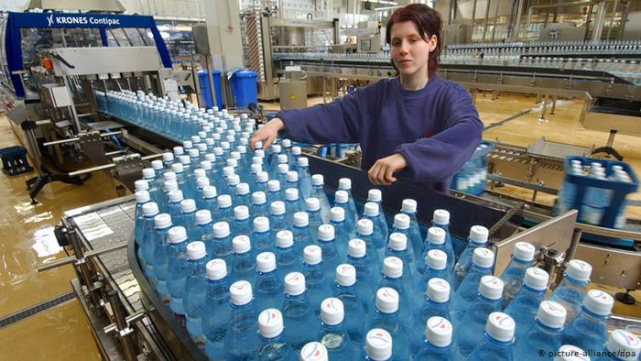 Disposal plastic water bottles are among the top culprits in global soil and water pollution.
Virtually all plastics made and used widely today are made from petroleum or its byproducts. Their advantages still apparently outweigh their negatives – just barely. And because they’re just too convenient, cheap and versatile for industry manufacturers to ignore…
Enter, Gen 2 bioplastics
Some plastics makers and users are daring to call this new class of substances a holy grail. They seems to outperform petroplastics without exhbiting the drawbacks of previous bioplastics.
Current bioplastics face a couple of major challenges. They’re not as strong as petrochemical-based plastics and they only degrade through a high-temperature composting system. The new ones are based on cellulose, rather than petrochemicals, and outperform traditional plastics through both their chemical composition and sructures. Perhaps most impressively, they degrade at room tem-perature, can be printed on, and resist air and water.
A new LEAFF
Researchers at Washington University in St. Louis, MO, call their new innovation LEAFF. It’s based on the structures and materials of humble plant leaves – just like our evolutionary ancestors used to wrap and store their food.
“We created a multilayer structure [with] cellulose […] in the middle and the bioplastics […] on two sides,” says Joshua Yuan, the Lucy and Stanley Lopata Professor and chair of energy, environmental and chemical engineering at the McKelvey School of Engineering. Yuan is also director for the Nation-al Science Foundation-funded Carbon Utilization Redesign for Biomanufacturing (CURB) Engineering Research Center. “In this way, we created a material that is very strong and that offers multifunc-tionality,” he adds.
The team developed both a new material, polylactic acid (PLA), and handling techniques for it that deliver definitive advantages over petroplastics…
PLAs are ideal for packaging. Not only are they more easily biodegradable than both conventional petro plastics and starch-based first-gen bioplastics. But they’re are also less air- and water-permeable and, structurally more durable, over practical useful lifetimes. And, though a secondary characteristic, they are also printable, saving users a lot of money because they don’t require separate, stick-on labels.
My take
If all the claims about LEAFF Gen 2 bioplastics prove true over extended testing, and they also prove competitive with petrochemical plastics as well, scientists say they could usher in a whole new age of plastics, both for packaging and other traditionally disposable applications.
The problem is, over the past 60 to 70 years, since the first generation of plastics came into general use around the world, a huge amount of damage has already been done to the environment. And even their most plastics-friendly supporters agree that damage can’t be undone…
~ Maggie J.