
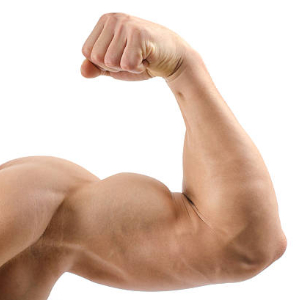
It’s ‘on the rise’, according to eating disorder specialists. It’s being exacerbated by social media. And it’s just as dangerous as anorexia or bulimia. They call it ‘Bigorexia’, a fixation on muscle size, showing up in young adult males…
 The official term for Bigorexia sounds rather mundane. It’s called ‘muscle dysmorphia’. But the consequences of the disorder can be anything but ord-inary – especially for teens caught up in the new Bigorexia subculture.
‘Big’, as in body building
“Bigorexia is a psychological condition and type of body dysmorphic disorder which involves a distorted self-image that focuses specifically on muscle size and physical appearance,” Kara Becker, a certified eating disorder therapist and the National Director of Eating Disorder Pro-grams at Newport Healthcare, told HuffPost.
explains: “The afflicted person is obses-sed with becoming more muscular and preoccupied with the [belief] that their body isn’t brawny enough – even if they actually have the physique of a body-builder.”
It quickly becomes clear how the dis-order got its name. Insecure boys just want to get ‘BIG’!
All in their heads
“Individuals may have an inaccurate view of their bodies, often believing they are smaller or less muscular,” said Amy Gooding, a clinical psychologist at the Eating Recovery Center, Baltimore. “This belief and subsequent preoccupation can lead to unhealthy behaviors, including obsessive exercise, and may lead to changing one’s eating to be as lean as possible.”
Bigorexia can affect anyone, but it’s most common in young males. A 2019 study indicated that 22 percent of adolescent boys engaged in, ‘muscularity-oriented disordered eating behaviors’. They’re attempting to ‘bulk up’, or gain weight. And they turn to supplements, diet changes and even steroid use to get the physique they want. The ‘look’ they think they need.
Easily overlooked…
First and foremost, eating disorders are commonly associated with girls. Most folks probably wouldn’t even look for them among boys, let alone see a problem.
“While there’s more awareness around eating disorders [these days], muscle dysmorphia can be overlooked for several reasons ― one reason being that it can lead to behaviours often encouraged in the weight room,” Gooding observed.
“Lack of awareness of the disorder may lead to the disorder being missed in someone who is strug-gling, as this is one of the less well-known disorders. Those who struggle may hesitate to reach out for help due to shame, secrecy or the normalization of the behaviours in the community.”
Not just social media triggers
While the specialists agree that photos and videos of young men with bodybuilder physiques posted on social media have a significant influence on susceptible young men.
But there are other causes behind the affliction. “A family history of mental health conditions, espe-cially disorders related to body image or anxiety, may increase the chance of developing bigorexia,” Becker says. “Likewise, people with low self-esteem, perfectionism or obsessive-compulsive tend-encies are more vulnerable to developing this disorder.”
Nagata warns, the ‘bodybuilder’ image is ‘a different reality‘ that is unattainable (not to mention undesirable) for most people.
Parents can help
Parents need to be aware of any changes in the body images of their adolescent boy. If it appears Bigorezia has taken hold, they should sit their kids down and talk about, emphasizing that being muscle-bound is not normal. As their underage kids’ social and cultural supervisors, parents should also consider limiting social media time, which should reduce the impact that pics and vids have on their children.
My take
The specialists also emphasize parents should impress upon their kids that human worth and dignity go beyond physical appearance. They should also ‘focus on [positive] qualities like kindness, creativ-ity, humour, etc.’.
If the parental intervention approach fails, it’s comforting to know there are many trained profes-sionals equipped to take the Bigorexia healing process further…
~ Maggie J.