
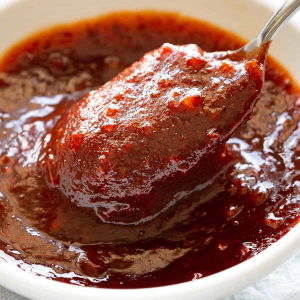
These days, you hardly have time to finish your last can before another new SPAM flavour comes along to tempt you. One gets blasé about it; call it ‘reveal fatigue’. But this time, it’s something exotic: Fermented Spicy Red Chili Paste Gochujang!
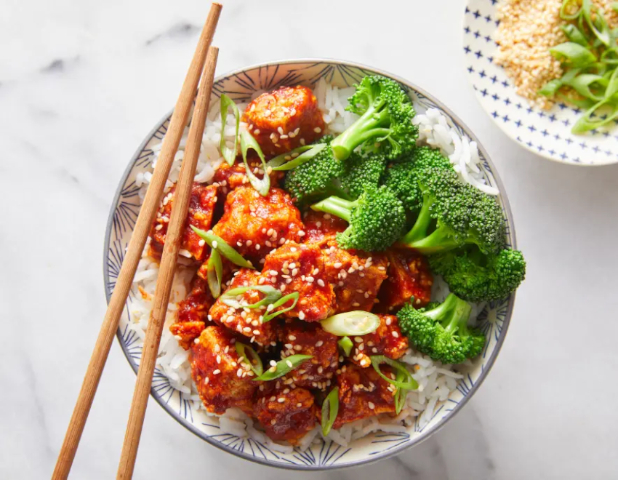 Crispy Honey Gochujang Tofu: A classic presentation. You can also use Chicken,
Beef, Pork, Lamb or Goat. Because Gochujang is just so darned versatile!
I blinked… And tried to recall the flavour of Gochujang from the one and only experience I’ve ever had with it. The memory was hazy but the resurrected sensation on my mental palate was distinct. There’s nothing else quite like Gochujang. The only essential descriptor Hormel left out of its label rundown was, ‘BBQ’.
‘Ancient and venerable’
Before you roll your eyes and t’sk me for using my favourite overused phrase again, let me offer a small mea culpa. I use ‘ancient and venerable’ only when it is suitable in the context. And because I’ve always loved the lofty character it conveys. It is my way of bestowing a special blessing on a per-son, place or thing. but it’s truly the optimal phrase to describe one of the foundational culinary traditions of Korea.
Everything about this Gochujang is exotic and steeped in history. Not unlike a cross between making Kimchi and the formal Japanese tea ceremony. To be authentic, the ingredients must be perfect, and the process must be performed exactly according to the ancient prescription.
What it is
Gochujang is a savory, sweet, and spicy fermented condiment popular in Korean cooking,” Wikipedia explains. “It is made from gochu-garu (chili powder), glutinous rice, meju (fermented soybean) pow-der, yeotgireum (barley malt powder), and salt.”
“The sweetness comes from the starch of cooked glutinous rice, cultured with saccharifying [sugar-producing] enzymes during the fermentation process. Traditionally, it would be naturally fermented over years in jangdok (earthenware) on an elevated stone platform called jangdokdae in the backyard”
The process is described in detail in a fascinating post at koreanbapsang.com, which provides an ingredient-by-ingredient and step-by-step description of the procedure.
Here’s something you don’t see in many recipes: Prep time: 4 hours; Cook time: 2 hours; Fermentation time: 60-90 days. After that, you can bottle and refrigerate it.
What it tastes like
First and foremost, it’s spicy. Not unlike many Korean specialties.The truth is, the heat level varies widely from one commercially prepared brand to the next. And, if you make your own, you can jazz it up (or down) to suit your personal taste.
But fans also pile on other descriptors including ‘gentle sweetness’, ‘floral’, fruity’, ‘slightly smoky’, ‘uptown funk’, and ‘umami sparkle’.
How it’s used
You can use Gochujang almost anywhere in the ‘Asian’ context in the same way you use Picante Sauce, Chili Garlic Sauce, Harissa or Sriracha in other culinary contexts.
But this unique condiment is so versatile, you can also experiment to your heart’s content. “For me, it’s always within reach and I love injecting its heady mix of flavours into dishes that are a little unexpected,” says Gochujang connoisseur Marion Grasby. “Because, IMHO, everything tastes better when it’s Asian. Case in point: Asian garlic bread. Cheesy baked potatoes. Pot pies.”
Get the picture?
I do. And I think it’s time I renewed my acquaintance with this classic condiment-come-cooking sauce…
All that being said, it’s no wonder the Hormel folks seized Gochujang as a new flavour option. The wonder is that it took them so long to pair this Korean classic with their flagship classic – SPAM.
If this post has piqued your interest, be advised that Hormel doexn’t say how long Gochujang SPAM will be around. So, get it while you can!
~ Maggie J.