
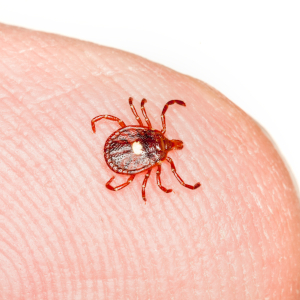
It’s not a common occurrence, but it does happen. And it behooves folks to be aware of this rare but life-threatening condition. I was shocked that I never knew a tick-born disease can make you allergic to beef!
 Reported Alpha Gal cases: The hot spot is in the US southeast. But the
range of the Lone Star tick is rapidly expanding northward…
A 47 year old man from New Jersey who was previously healthy […] died suddenly about four hours after eating beef. For months, the cause of his death remained unclear.
That changed when Thomas Platts Mills, MD, a University of Virginia physician and internationally recognized allergy specialist, took a closer look. Platts Mills originally identified the condition years ago and continues to lead research into how it affects patients.
What it is
It’s called Alpha Gal Allergy, and it an be triggered by the bite of the Lone Star tick (see photo, top of page), the Black Leg tick and others, found across North America and Europe.
According to Google Search: “Alpha-gal syndrome (AGS) is a serious, delayed allergic reaction to a sugar molecule (alpha-gal) found in most mammals, triggered by a tick bite (like the Lone Star tick), causing symptoms from hives and digestive issues to life-threatening anaphylaxis hours after eating red meat, dairy, or gelatin, requiring strict avoidance of mammalian products, […] though sensitivity can lessen over time. Prevention focuses on avoiding tick bites through repellents and protective clothing.”
In other words…
If you get the bite, you may get the disease. But not all of us who are bitten do get it. Just one of the oddball facets of Alpha Gal, which still confound researchers.
If you do become infected, you may not become ill until 4 to 6 hours later. Sometimes as long as 8. When you do, symptoms can include, “Hives, itching, swelling (lips, face, throat), wheezing, nausea, vomiting, diarrhea, abdominal pain, dizziness, and fainting.
“Severe Reactions (Anaphylaxis) [may manifest as] trouble breathing, rapid pulse and lighthead-edness, requiring emergency care.”
Like other allergies that can cause severe reactions, Alpha Gal sufferers may be prescribed epine-phrine for emergencies – in what’s become popularly known as an ‘epi-pen’.
It’s complicated…
One problem with identifying and treating an Alpha Gal reaction is that some sufferers my not even know they’ve been bitten by a tick. And symptoms may not show up until hours later.
Doctors on the lookout for severe allergic reactions usually look for immediate causes. Most serious allergies manifest as severe breathing trouble, within minutes, or even seconds of a sufferer’s mu-cous membranes coming in contact with the allergen. So, many clinic and hospital emergency room physicians may not immediately recognise the problem as Alpha Gal allergy.
Becoming more common
Alpha Gal allergy is, admittedly, very rare. But it’s rapidly becoming more common. Official estimates put the current number of sufferers in the US alone at more than 450,000.
“[Alpha Gal has] increased dramatically across all demographics. Overall incidence proportion rose by over 5,500 percent, with the most substantial increases observed in individuals over 40 years old,” Google Search reports. “Age-stratified analysis within racial groups revealed particularly sharp in-creases among Black (9,530 percent) and Hispanic (7,678 percent) adults over 40. Females experien-ced a steeper rise in incidence rate (11,169 percent) than males (7,426 percent). Predictive modeling projects continued growth through 2030.”
My take
So… We now have another deadly disease to watch out for. And another one carried by ticks.
Environmental investigators say the increase in Alpha Gal and other Tick-born ailments may be link-ed to a massive increase in tick numbers, plus a move northward by the pests, triggered by global warming.
I can’t help wondering… What’s coming next?
~ Maggie J.