
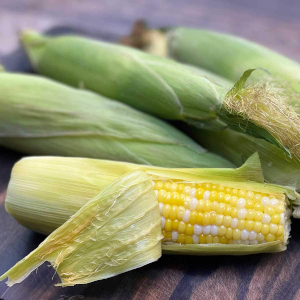
A recent kerfuffle here in my town has raised broader questions about the viability of the concept of urban gardening. I’ll admit, I had not considered the potential drawbacks of growing our own food on our city ‘homesteads’. It’s a contentious issue…
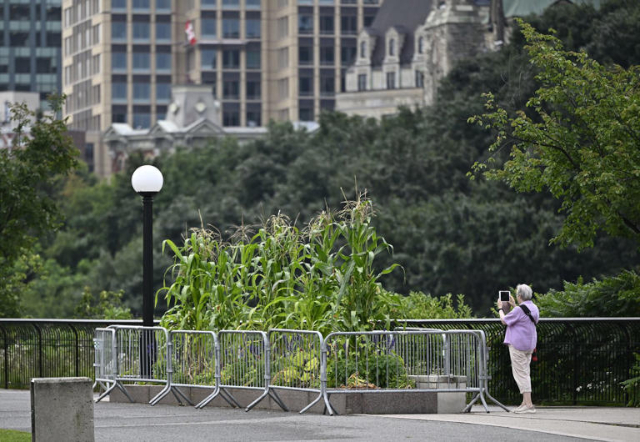 An NCC ‘urban garden’ adjacent to the Rideau Canal, Parliament
Hill and the Byward Market. To been seen, but not eaten…
I’ve often written, in this space, about initiatives involving growing one’s own food – in suburban back yards, apartment window boxes, and even on downtown highrise roofs. And I’ve focused on how you can save money, improve your diet and help the environment by making even a small effort.
Leadership role
Here in Ottawa, Canada’s capital, the unique – and at times controversial – National Capital Commission (NCC) is charged with handling design and our federal government properties. That includes the Houses of Parliament, of course, as well as the many parks and ceremonial spaces sprinkled around town. The NCC is also mandated to preserve and celebrate the nation’s and the city’s history and heritage.
A unique situation
Among the factors the NCC and its planners have to keep in mind when programming its spaces s the unique situation downtown Ottawa occup0ies. Literally. On ‘unsurrendered’ aboriginal lands recently recognised officially as sacred to the Anishinabe Algonquin Nation. Who were settled there long before Europeans showed up.
Accordingly, the NCC strives to include the ‘First Nations factor’ in their seasonal displays and events.
A great idea…
The Commission is responsible for ceremonial and decorative plantings in hundreds of locations across the Capital. This spring, the NCC embarked on an ambitious plan to showcase two principles more closely related than they night appear on the surface.
In recognition of the need to promote sustainable food production, the NCC decided to plant farm crops in many if its locations, including those in the downtown ceremonial district. The crops were chosen to demonstrate the native peoples’ practice of growing corn, beans, squash and perennial strawberries together, maximizing use of the land and optimizing crop yields.
… Maybe, not so well realized
Alas, the Commission didn’t take into account another inescapable factor in Downtown Ottawa life. Literally in the shadows of the seat of the Canadian Government hundreds of homeless folks -street people – inhabit the ‘heritage’ neighbourhood and tourist destination known as the Byward Market. They also roam the banks of the Rideau Canal, where it runs through the city’s core, spilling out into the Ottawa River right between Parliament Hill and the Market. I’m told they particularly enjoy the big riverside park there, known as Major’s Hill.
And so, it has come to the NCC’s attention that, as the summer progresses and the crops reach maturity… The homeless folks have taken to harvesting the fruits and vegetables for their own use. Hence the installation of the ‘crowd barriers’ around the NCC planter in the photo, above.
Not what you’re thinking
It’s not that the NCC begrudges the ‘locals’ having healthy food to eat. It’s that the produce from the downtown planters may be contaminated with dangerous substances.
“Some of our sites historically contained contaminated soil and the water source used for irrigation (varies) from site to site,” the Commission said in a statement.
But the NCC plan has always been for the demonstration crops to stand until the end of November, to demonstrate the entire growing cycle. Some observers have suggested, the Commission doesn’t want random harvesting to ‘ruin the display’.
Nevertheless… The NCC folks who came up with the ‘urban plantings’ program should have seen the problem coming.
My take
I have to agree with the NCC, that it’s important to make sure no street people fall ill because they ate contaminated produce. But I can also imagine that some folks at the commission were just as concerned about damage to the displays.
In fact, the demonstration plantings are just the latest expression of the NCC’s ongoing program exploring, “the potential for food production on urban lands.”
The agency says it’s opening more Greenbelt land to local agriculture and community gardening, a program that goes back many years. And I wholly support that initiative. There’s a big up side to the ‘urban plantings’ scheme. And we should celebrating that, rather than getting hung up on whether or not the produce is safe to eat.
However… I think it’s very important to consider the many sources of potential air, soil and water contamination present in the urban environment. Massive volumes of vehicle, commercial and industrial exhausts are just the beginning. We all need to be aware of the risks involved in urban farming.
~ Maggie J.