
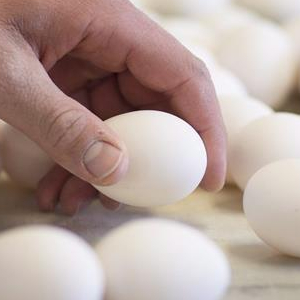
The current US egg crisis has triggered a whole new top-10 category among Google search requests: ‘egg substitutes’… But few if any have really addressed the look and feel issues surrounding faux eggs…

We tried to address the demand for ‘egg substitutes that look and behave like fresh eggs’ in previous posts. And we concluded that the choice of acceptable ones was limited.
Few ‘possibilities’
The closest you can come is with pre-viously-processed liquid eggs intended for commercial and manufacturing use. Next best is the new liquid egg substi-tutes made from plant sources that can approximate scrambled eggs and ome-lets. Alas, the foregoing are only avail-able to the masses from ‘survival food’ providers. And the latter are expensive.
But now, one additional candidate has proposed itself as a viable egg replace-ment. And the jury remains out on whether it qualifies or not.
Chickpeas to the rescue?
SpiceSpicebaby.com contributor claims her Chichpea Flour Omelet, “checks the breakfast boxes without breaking the bank. Plus it’s good for you (packed with fiber and micro-nutrients) and most importantly, at least for me, DELICIOUS!”
Chickpea flour, Koya says, is “packed with vitamins and minerals like folate, magnesium and mangan-ese as well as plant based protein and fiber which not only feeds the friendly bugs in your microbial ecosystem but may also help lower cholesterol (unlike eggs, which for many folks, can raise choles-terol, especially in excess!)”
What’s not to like about that? But what about the look, texture and ‘mouth feel’ of Chickpea ‘eggs’ compared to the real deal?
Enter the omelet recipe…
That’s one reason Koya has proposed an omelet recipe she says she makes regularly, and which really does fill the wide spectrum of ‘requirements’ she says most folks have for an acceptable ‘breakfast plate’ egg replacement.
The recipe is really just a fairly simple demonstration of how to use Chickpea flour and a few other common ingredients to approximate the presence of real eggs in popular applications. Specific ad-ditional ingredients make it an ‘omelet’. So I’m going to refer to the Chickpea egg replacement option as ‘the Chickpea method’…
The ‘method’
The ‘method’ is based on a certain proportion of Chickpea flour to water (1 to 1, actually). Crucial ad-ditional ingredients include turmeric (for traditional yellow-orange egg colouring), and a fair amount of salt, to boost the overall flavour of the dish. The relatively bland character of the Chickpea flour base demands something more; thus does Koya include a dab of paprika in her recipe.
A goodly addition of grated Cheddar cheese and red onion complete the flavour enhancements while reinforcing the overall identity of the dish as a classic ‘omelet’. Ditto, the spinach and the cilantro garnish.
My tips…
First, the Chickpea ‘batter’ is quite sticky. Prepare the pan as if you were making pancakes to avoid disaster. And cook your creations at a relatively modest temperature to avoid burning.
Do taste for salt to ensure you have enough to ‘make’ the flavour.
Be prepared to achieve a result closer in some ways t a crepe than an omelet. The Chickpea version will be somewhat flatter than a usual real-egg omelet. And the edges will be curled like a crepe. (See photo, above, left.)
The only leavening in this recipe is the air you whisk into the batter as you mix it. Here is the single most important technique that may require practice to get perfect perfect.Resist the temptation to add baking powder or baking soda. I’ve tried it, and it results in an end product that gives itself away as a ‘flour’-based result rather than any kind of ‘egg’ every time.
My take
Handled artfully, the Chickpea method can produce an acceptable substitute for a real eggs in any application that doesn’t demand a separate yolk and albumen to appear on the plate. It is not an acceptable trade-off for real eggs or other types of egg substitute in recipes that depend on the special qualities of real egg fats and proteins for success.
One real advantage I see for the Chickpea method is, it’s relatively inexpensive. And it’s not subject to shortages for any of its ingredients. It’s also easy to make and use.
If you want a substitute for real eggs in an omelet, scrambled eggs, a quiche or other such recipe… Try the Method!
~ Maggie J.