
High prices continue to grab the food-related headlines in Canada. But recent government inquiries, the Grocer’s Code of Conduct, and consumer boycotts have changed nothing. Is outside competition the key to lower food prices?
Where’s the beef?
That was the famously shrill cry from older ladies in a Wendy’s commercial years ago. They were wondering why the patties in other burger joints’ offerings were so small.
Now, it’s a classic metaphor for the ongoing cries from desperate Canadian shoppers for some kind of meaningful action to lower food prices. But we may just get the answer from an outside observer. The BBC recently showcased a feature on Canada’s grocery conundrum. And in doing so, spotlighted a possibility being considered by the government to re-energize competition in the supermarket sector.
A case in point…
“Groceries did not used to be such an issue but the prices have skyrocketed this past year so we’re going without anything frivolous,” Terra Suffel, a 49-year-old single mother of two living in Toronto, told the BBC. “We can’t really afford much meat, and our main protein is now eggs.”
She recalled that $200 would once feed her family of 4 for a week, comfortably. But now, it barely covers lunches and basic pantry staples.
Suffel is boycotting Loblaw’s – Canada’s former ‘Grocer of Choice’ – along with thousands of other shoppers fed up with persistent high prices even thoiugh inflation has turned the corner, and food prices have actually begun to subside, albeit slowly.
The grocers’ shame
Last year, the heads of the Big 5 Canadian grocery chains came to the nation’s capital three times to testify before parliamentary committees investigating food prices. And they insisted they weren’t responsible. The grocers pointed to continuing high global inflation, higher production costs and other supply chain factors in the that were out of their control. They promised meaningful action to lower prices, but as of today have taken none.
And amid this atmosphere of stonewalling and denial, the grocers have reported record profits for 2023, when the price crisis came to its head. And that’s what prompted the Loblaw’s boycott, which initially ran for the month of May, but has now been extended indefinitely.
Government won’t act
It appears the federal government won’t act decisively to force food price reductions. Many ordinary folks don’t understand why. We won’t get into the raw money-and-politics aspect of the situation here. Suffice it to say, Canada’s Innovation Minister, Francois-Philippe Champagne, has been quietly exploring another way to meet the food price challenge.
Champagne has made several overseas trips in the past few months to ‘court’ big international grocery chains. The theory is, if one or two of them were to co me into the Canadian supermarket game, the established players would have to pull up their socks to meet the challenge of real, honest-to-goodness competition again. Prices would almost certainly come down. But experts have warned they probably wouldn’t decline by as much as the ‘minimum 15 percent’ demanded by Loblaw’s boycotters.
A different world
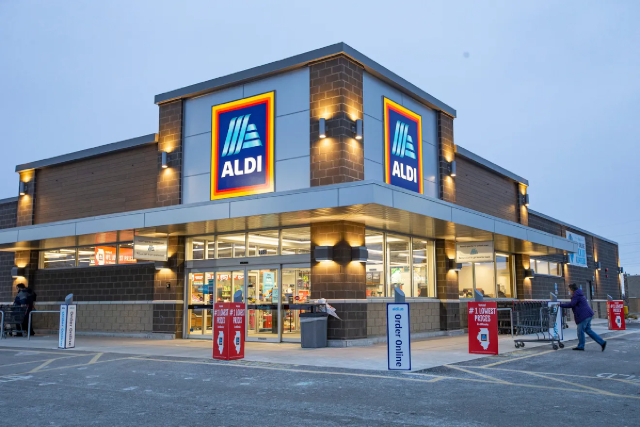
It’s a different world in the UK, where they have a supermarket community populated by 14 different chains. They all seem to survive amid a much hotter competitive climate. What’s different there is the presence of international players such as the mammoth Aldi brand. It’s homed in Germany, but operates in no fewer than 17 countries – literally around the world.
Aldi is one of the UK’s leading supermarket chains and some industry watchers there say it has a significant influence on other players – keeping them, their prices and their practices in line. With it’s global footprint, global buying power and other advantages of scale, Aldi has definite advantages over competitors operating in a single, regional market space. Aldi is already in the US market, and has been recognized there as a price leader in many grocery categories.
If we build it, will they come?
I suspect an outside, global supermarket chain such as Aldi would need some enticement to come to a relatively small market such as Canada. But if Champagne was to make the prospect enticing enough, with tax breaks and other ‘hiring bonuses’… It just might happen.
I, for one, say it can’t happen soon enough…
~ Maggie J.