
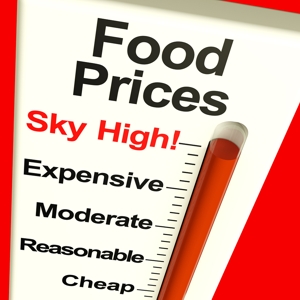
A new survey reveals that half of all Americans are struggling to afford enough food for their families. And the situation is getting worse. Over half say they’re paying more for food now than they were last year… Four out of five are shopping differently…
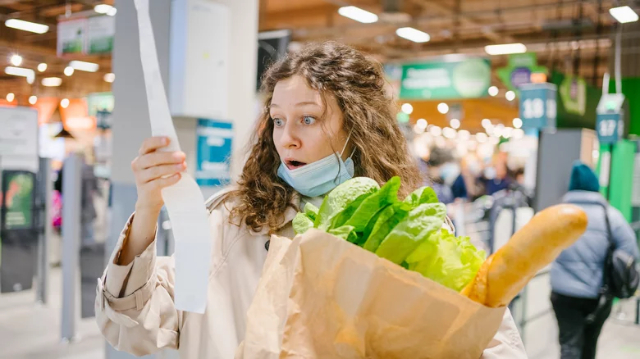
As time goes on, polls and surveys of average consumers, to gauge how high food prices are effecting their lives, are producing more and more discouraging results…
It’s literally a struggle…
Every time a new report on consumer buying power comes out, more of fall below the poverty line. And that means hard decisions about whether to pay the bills or buy food are getting harder.
The Learning Tree survey reveals that consumers are more discouraged than ever by unremitting high food prices that are only forecast to rise higher this year.
What they found
The LT survey’s key findings are few, but profound:
- Americans are struggling to pay for groceries as prices rise. More than half (52%) say that they are spending more on food than they were last year, and 49% say it’s at least somewhat difficult to afford food right now.
- Nearly 90% have changed how they shop for groceries to offset higher food prices. Common strat-egies include paying closer attention to grocery prices (30%), cutting back on “splurge” items (24%), being more mindful of food waste and leftovers (23%), and choosing store or generic brands (23%).
- About 4 in 10 Americans still eat out and order in at least once a week, but habits vary by genera-tion and income. The more people earn, the more they order from restaurants — 90% of people from high-income households eat at restaurants at least occasionally. Meanwhile, baby boomers are far less likely to order takeout and delivery than other generations, with 43% saying they didn’t order out once in the past month.
- A majority (84%) of people have cut back on restaurant spending to save money. They’re eating out less (39%), paying attention to menu prices (25%) and choosing cheaper restaurants or fast food (22%). A quarter (25%) say they’re tipping less.
Fear climbing the ladder
Fear of high food prices is climbing the income ladder. It’s not only those who traditionally have trouble making ends met – parents, older folks and the younger generations. Now, 57 percent of shoppers earning $100,000 and up are reporting, “feeling concern about paying for groceries in the past month. ”
Naturally, the number of folks changing their grocery shopping habits to make sure their stomachs are full has increased. The number of those who say they still order out or patronize restaurants has, in sharp contrast, dropped by 84 percent over last year. But one in four Americans who still eat out or order in do so only once a week.
My take
How high do these distressing numbers have to get before those withy the power to act do some-thing significant to halt the rise of food prices, and start driving them down.
The producers and retailers say they’re hamstrung by the prevailing high costs to do what they do. And the blame for that, in turn, is placed on an unsettled economy and the wars still raging abroad.
So it’s up to the only other group with power over this crisis – governments – to act. The largely vol-untary measures governments have suggested, and the food chain has implemented have done no-thing to help consumers. And that been the bottom line all along. Supermarket Super-Powers are still pulling down double-digit profits every year and nothing from that bounty is being channelled back to their customers by way of lower prices.
I say governments at all levels should tax or require caps on supermarket profits with the benefits going directly to consumers. The supermarkets giants have complained for years that they are work-ing on razor-thin margins’. That used to mean 3 to 5 percent overall. Their profits – tallied in the billions of dollars – currently top 10 percent, according to their own shareholder reports. It’s time for the fat-cat shareholders to share with us!
~ Maggie J.