
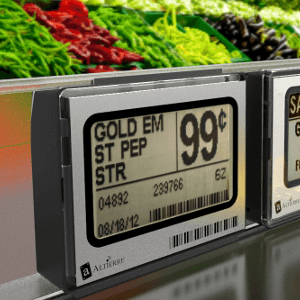
Fast Food purveyors are struggling to get their first wave of AI tech working right. But already, Grocery retailers are dabbling in what some observers are calling Food AI 2.0. And the ‘dynamic pricing’ conspiracy monster rears it’s ugly head, again…
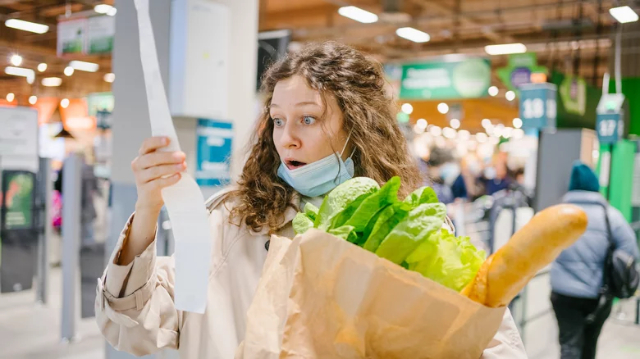
There’s that demonized, feared term again: ‘Dynamic Pricing’. It first came to the public’s attention when Wendy’s execs used it to describe plans the Fast Food chain had to raise or lower prices at a moment’s notice on their new digital menuboards.
Observers immediately equated the plan to ‘surge pricing’. That’s when a retailer raises prices to capitalize on the scarcity of, or increased demand for a product or service.
Don’t get us wrong…
Wendy’s scrambled to deny any intention of using it’s new tech that way. Instead, an anonymous spokesperson said, in a statement, that the system might be used to offer lower prices when bus-iness was slow, to encourage traffic. Or advertise spot ‘manager’s specials’.
Then, more than one Fast Food chain tried out new, human-less, AI-powered drive-thru ordering and payment systems. And customers were less than impressed. Wendy’s had to institute an emergency tweaking program for its initial effort. And McDonald’s announced it was actually removing its pilot AI drive-thru systems completely.
Some consumers claimed a victory over AI.
But it was not to be
All major Fast Food chains have pledged to their shareholders that they’ll leverage the power of AI to its limits, to get rid of costly, error-prone humans at both service counters and in the kitchen. This will be a key factor in cutting costs and increasing efficiency. Which is all part of the much touted ‘restaurant of the future’ concepts the chains have been unveiling.
It’s now just a matter of time – and further evolution of the AI systems – before the only human staff in Fast Food joints will be background workers who feed ingredients to kitchen prep machines and maintain them.
While we weren’t watching…
While we were distracted by the Fast Food sector’s tumultuous and fraught first attempts to cash in on AI, the grocery stores were quietly working on their version. And only now is the story coming into the light.
The part of the system shoppers see is digital price tags. You’ve probably already seen them on the shelf rails at some supermarkets. The idea is that these battery-powered gadgets can accommodate price changes without the trouble of printing and sticking up new paper labels.
Tip of a new iceberg
But they’re just the tip of a new iceberg. And prominent critics warn, unsuspecting shoppers could discover they’re aboard a consumer Titanic.
US Democratic Senators Elizabeth Warren and Bob Casey recently sent a letter to the Head Office of Kroger supermarkets, America’s largest grocery chain by sales. It claimed widespread adoption of digital price tags, “appears poised to enable large grocery stores to squeeze consumers to increase profits.”
Like digital menuboards at Fast Food restos, they warn electronic shelf tags could be used to imple-ment surge pricing. And that would be unacceptable.
Kroger’s does a Wendy’s
Kroger immediately and publicly replied to the highly publicised letter from the senators with it’s own open statement denying that intention.
A Kroger spokesperson what the store is really planning to do, “is to lower prices over time so that more customers shop with us, which leads to more revenue that we then invest in lower prices, higher wages, and an even better shopping experience.”
“Any test of electronic shelf tags is to lower prices more for customers where it matters most,” Kroger’s insisted. “To suggest otherwise is not true.”
But the tags aren’t the only indications that something big – and dark – is brewing.
Smile! You’re on Facial Camera
There appear to be no ends to which supermarkets won’t go to get you to spend more money. We’ve been hearing for some time that AI will allow retailers and service providers to ‘tailor’ deals and offerings to your specific needs. They’re already doing it using personal information you volunteer to digital systems, and stored data on your buying habits, gathered at the cash register.
But you’ll have to give up a lot to get the specials.
I have a background in electronic media and consumer-oriented digital tech news. But even I was amazed to discover just how far along development of some truly invasive, stealth info-gathering systems has come.
Kroger’s, for one, has claimed it’s partnering with Microsoft to develop systems which would embed a camera in every digital price tag, and employ facial recognition software to ‘exploit sensitive customer data’ and ‘craft personalized offers’.
My take
I may be old school, and I may have deeply inhgrained Boomer values, morals and ethics. But I am affronted by the suggestion that some machine is going to try to psychoanalyse me in the bread aisle as I agonise over the choice of a bag of tortillas.
It may be true, that the system will ultimately act in my best interest. But I feel violated by the process. Just the thought that I might be subjecting myself to such a process.
If the future of Fast Food and grocery shopping is irrevocably destined to be dominated by AI, I have a suggestion. We Boomers are still the biggest customer group out there. And will be for some time to come. Many of us, I think, feel as I do – that the shopping experience is just as important as affordable prices and the quality of the goods I buy. We have organic grocery stores. And ‘healthy’ food stores. There’s already a plethora of online shopping opportunities for specialty foods and foods dedicated to followers of certain eating regimes, such as vegans, ketons and paleons.
Why not give us Boomers ‘digtial-free’ shopping environments where we’ll feel comfortable, safe – and even, perhaps, more willing to give up our precious dollars to you?
~ Maggie J.