
A few days back, we showcased a new lab study showing that we get less magnesium than we really need in our daily diets. And it’s largely because we eat so much processed food and so few fresh fruits and veggies. Enter: Leafy Greens…
 Classic Spanakopita: An easy, tasty route to maximum magnesium!
I’m still kicking myself for neglecting my magnesium intake. It’s all too easy to come up short on this truly essential nutrient the way we eat these days – in the co-called developed western world.
It’s crucial!
Magnesium is important to more than 600 basic chemical reactions that keep our bodies going. And critical to 200 more. Why aren’t we as familiar – and concerned – with it as we are with iron, potas-sium, phosphorus and sodium?
I blame it on ‘diffusion’. Magnesium is essential to a bewildering host of minute bio-functions. But it never shows up in the scientific spotlight the way it’s metallic cousins do. Not to mention the ‘star’ vitamins, such as A, B, C and D. They all play leading roles in major somatic scenarios that can have devastating consequences if they go wrong.
But based on what I’ve been reading about magnesium, the whole house could come crashing down – a brick at a time – if we don’t consistently get enough.
How to get more
The easiest way – though not, at the moment, the most economical – is to eat more leafy greens. The darker-green the better.
That’s where veggies such as spinach, kale, Swiss chard, and collards come in. But a lot of folks avoid those particular greens, mainly because because they taste pretty bitter by nature.
But milk is also relatively high in magnesium, as are many types of nuts and seeds, tofu, pulses like beans and peanuts, and even potatoes.
So many folks who are aware of their magnesium situation opt for daily supplements. A quick Google search reveals hundreds – if not thousands – of different magnesium supplements available in vari-ous strengths and forms.
A significant subset of those come in combination with calcium. Calcium and magnesium have long been recognised as a dynamic duo for maintaining bone density and fighting bone loss – both es-pecially troubling issues of advancing age…
An eye-opener
The whole magnesium thing has been an eye-opener for me. And I’m currently looking at ways to get more natural-source magnesium into my diet. As I hinted above, it’s not a an inexpensive proposi-tion. Unless you do the math, and play the field (pun intended).
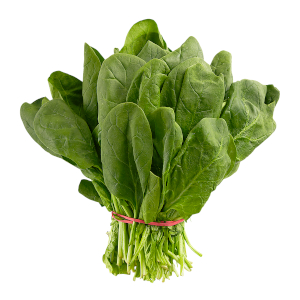
Spinach is one of the least-bitter dark green leafies (see photo, top of page). It’s also less chewy if you pick-and-choose the younger, more tender leaves. That’s a well-known dodge; the reason the concept of ‘Baby Spinach’ came into being. And it lends itself to a wide range of culinary applications. From a simple spinach-and-strawberry salad, to a full-on Veggie Lasagne. Then, of course, French Quiche Lorraine, Italian Torte Salata, Spanish Espinicas a la Catalana, and Greek Spanakopita. To cite just a few classics.
My take
The good news is, spinach is a long-season veggie that grows pretty much everywhere. Right now – at mid-summer, where I live – it’s just $1.29 a bunch for the real-deal, locally-grown fresh product. What better time to get to know Popeye’s favourite food? The old sailor know what he was talking about, after all!
My questions for you:
Have you ever had your blood magnesium level checked?
Are you sufficiently motivated – or at least curious – now, to ask your doctor to test you?
Would you consider taking proactive measures to add magnesium to your diet?
Muse on that…
~ Maggie J.