

A new study on the advice physicians give, and the way they give it, to weight-challenged patients has come to a startling conclusion: We need to teach doctors about nutrition. The traditional emphasis on BMI is failing their flocks…
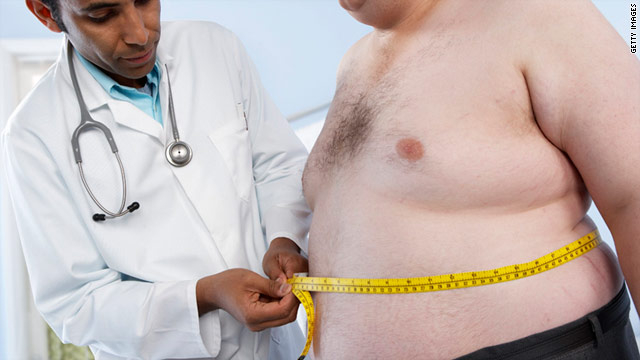
“Current medical training focuses on weight and body mass index (BMI), exacerbating anti-obesity bias and increasing the risk of eating disorders,” an abstract of the study report starkly states starkly. “And it doesn’t give future doctors adequate education on how to encourage healthier eating habits.”
Pulling no punches
It would be hard to express the findings of the study any more clearly. And that short-but-not-so-sweet statement underlines the seriousness of the issue.
“Mainstream medicine is still very focused on linking weight to health,” said Kearney Gunsalus, lead author of the paper and an Assistant Ppofessor at the Augusta University/University of Georgia Medical Partnership.
“Because people with obesity and higher body weights are more likely to have health problems, it’s easy to jump to the conclusion that the weight itself is causing those problems. And if you assume that the weight is causing the problems, it seems logical to assume that weight loss is the solution.”
It’s a classic mistake: If all you have is a hammer, you treat everything as if it’s a nail.
Nutrition the key
Part of the problem is that many doctors still rely on BMI as the be-all and end-all measurement to determine if a patient is normal, overweight or obese.
That ‘standard’ has been challenged in recent times by a new metric: Waist Circumference to Height. Researchers compared the WCH metric to BMI in a series of experiments over the past year and found it agreed much more closely with the results of a definitive Dual-Energy Xray Absorptiometry (DEXA) scan.
That’s just one recent development that’s contributed to a new focus on ‘weight versus health’. And the emergent opinion among leading experts is, a greater emphasis needs to be placed on nutrition.
A focus on overall health
Dr. Ellen House, co-author of the publication and an Associate Professor at the Medical Partnership, explains: “We really love things that are clear-cut and black-and-white in medicine. But if the benefits precede and appear to be independent of weight loss, we need to shift the conversations physicians have with their patients to focus more on health and not weight loss.”
Anti-fat bias
“Overweight patients are less likely to get the appropriate screenings or treatments for their medical concerns,” House observed. “Physicians will miss the asthma, they’ll miss the cancer, because they attribute symptoms to weight when weight isn’t what’s causing the patient’s concerns.”
“I think doctors are trying to help people be healthier by advising them to lose weight; they’re just not aware of the harms that can be done by that advice,” Gunsalus said. “If I could wave a magic wand and have doctors do one thing differently when interacting with their patients, it would be to start from the assumption that every patient wants to be and is capable of being healthy.”
My take
I agree with the experts. Particularly with their positions that overweight and obese patients are more likely to be pidgeon-holed into weight-loss treatments without the added dimension of overall health and nutrition advice.
I also agree that it’s important for doctors to ‘reframe’ their discussions with patients, “to focus on healthful behaviors, such as moving more and avoiding labeling foods as inherently ‘good’ or ‘bad’.”
Mostly, I heartily approve of the broadening of physicians’ horizons when dealing with situations and conditions to which many different factors contribute. Science and the science-based professions are traditionally loathe to seek advice or opinions outside their own blinders-on niches. And I’ve always endorsed the sometimes-demonized concept of multi-disciplinary research…
~Maggie J.