
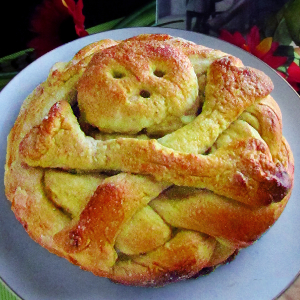
This is not technically a food post. But it does talk about a specific kind of eating. One that was not only popular among, but crucial to Christians in Medieval times. Have you ever heard of the arcane, demonic custom of Sin Eating?
The headline grabbed my attention like a gator grabs your leg. I had never heard of Sin Eating before, and I couldn’t resist finding out more. I’ll admit, I initially thought they were talking about emotional eaters, driven by guilt to gorge after committing a forbidden act…
Something much darker
By the end of the first paragraph, I knew the post was discussing something much darker. Something beyond the culinary – something in the realm of the supernatural!
Every Christian knows what sin is. And some branches of the belief system deal with the concept in frightening detail. Suffice it to say, no devout Christian wants to take sins to their grave. In Medieval times, the issue was cardinal – as in cardinal sin.
Avoiding purgatory… or worse
The average person in the Middle Ages was aware that their life was apt to be ‘nasty, brutish and short’, as the preeminent English philosopher of the day, Thomas Hobbes described it.
It’s been said that many folks felt their time on Earth was just a kind of trial, to prove they were worthy of entering the Kingdom of God. And a trial it was for most, who had to endure plagues, wars and the oppression of the nobility. Death may actually have been something some looked forward to – their ascension from the mud to the gleaming ‘house with many mansions’.
A practical approach
So… Sin Eating became something of a lucrative sideline – particularly for those who weren’t all that devout. The process was simple.
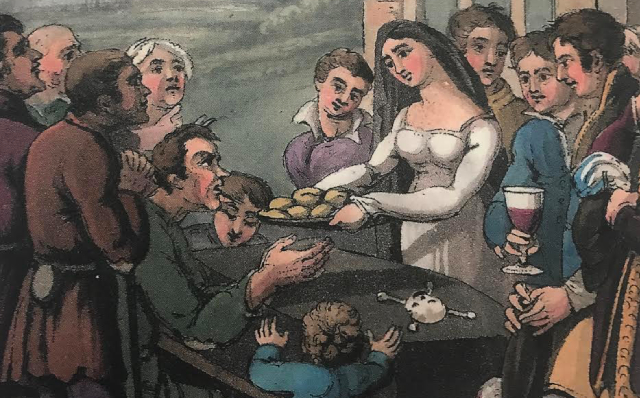
When a person was near death, the Sin Eater was called to ensure that the soon-to-be-late individual didn’t take any sins to their grave, and could therefore go directly to Heaven. The Sin Eater made a show of placing a piece of bread on the chest of the deceased as soon its last breath had been taken. The bread was left there for a period of time that could be interpreted as the symbolic crust drawing out and absorbing the deceased’s sins. Then the Sin eater simply ate the bread. Making the whole ceremony a sort of dark cousin to Holy Communion.
Thus were the deceased’s family able to send their loved one to their rest with an easy heart.
Just one catch
The problem was, the Sin Eater was thought to have taken on the sins of those they served. What kind of afterlife could they look forward to? As we hinted earlier, the Sin Eaters were often folks who didn’t believe in Heaven or Hell. But they did believe in getting rich off the fees they charged the bereaved. And the family of the deceased even provided the bread. A charlatan’s dream gig.
My take
As a writer and a story teller, I love the saga of the Sin Eaters. And I have to agree, the custom served a vital purpose for the families of those who passed away, at a time in history when there was much the living had to dread and loathe.
We have nothing of the sort in this day and age. And that’s probably a good thing…
~ Maggie J.