
Folks have many questions about the classic soda we call Root Beer. It goes back, historically, as far as Sarsaparilla. Both 0f which pre-date the invention of Coca Cola. But it’s managed to maintain a certain mystique cola never enjoyed…
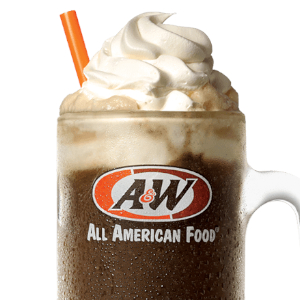
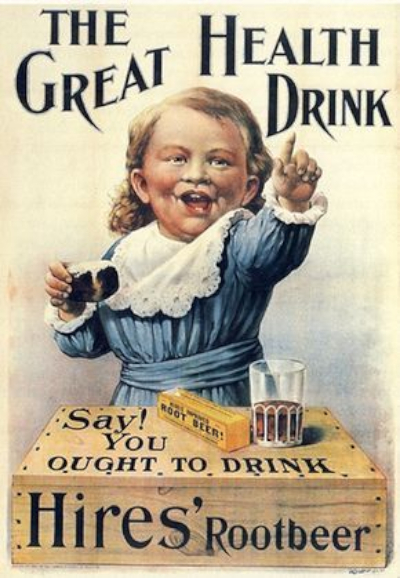
I loved Root Beer the first time I tasted it. I especially loved A&W Root Beer in their trademark ‘frozen’ mugs. No better way to enjoy this ancient and inimitable quencher! But there are many other Root Beer brands out there. Including the ‘original’ – Hires. More on that later. Root Beer’s ubiquity is a nod to it’s timeless appeal.
 Rooted in history
It’s claimed that the first Root Beer was concocted – in the US of course – in the 1700s. The first known recipe was re-corded in the 1830s. And the stuff be-came a commercial product in the 1840s.
That qualifies as a meteoric rise, in marketing terms! And the stuff has, not surprisingly, attracted a huge following that spans generations.
But the earliest Root Beers were some-what different than the ones we drink today. The original ‘recipe’ was based on sassafras tree bark or the similax ornata vine. The latter was also used to make Sarsaparilla. But that’s a different story, possibly for another day.
Additional ingredients included a var-iety of ‘sweet’ spices, many of which were also used in baking. Many makers kept their specific blends secret.
Enter, the Pharmacist
You’ll recall that Coca Cola was invented by a pharmacist who was also a soda fountain proprietor. And the beverage was originally intended as a restorative ‘medicinal’.
Echoing the Coke story, “Pharmacist Charles Elmer Hires was the first to successfully market a commercial brand of root beer,” according to Wikipedia. “Hires developed his root tea made from sassafras in 1875, débuted a commercial version of root beer at the Philadelphia Centennial Exposition in 1876, and began selling his [flavouring] extract.
“Hires was a teetotaler who wanted to call the beverage ‘root tea’. However, his desire to market the product to Pennsylvania coal miners caused him to call his product ‘root beer’, instead.”
That was the trigger that sent Root Beer gushing across the land.
Modern Root Beer
The Root Beer we drink today is significantly different in composition from the original ‘elixir’. Its ingredients include not sassafras, but a derivative, which replicates the flavour while elminating the cancer-causing component saferol, which was banned by the US Food and Drug Administration (FDA) in 1960.
Other flavours may include, but are not limited to: wintergreen, juniper, vanilla, caramel, wintergreen, black cherry bark, licorice root, sarsaparilla root, nutmeg, acacia, anise, molasses, cinnamon, sweet birch, and even honey. Every maker has it’s own proprietary blend.
But is it ‘beer’?
Root Beer was once true beer. It has always contained a lot of sugar, but originally it was allowed to ferment for 12 hours or so to develop a low percentage of alcohol. Carbon dioxide gas, a byproduct of the fermentation, was expressed as effervescence, which in turn churned up the classic foamy head.
Now-a-days, bottlers inject CO2 into Root beer, like they do with all other sodas. So most modern Root Beers are alcohol free and okay for everyone to drink.
But… Some devotees prefer to make their own Root Beer, using the original method that employs fermentation. That’s legal in most places, under the same rules and regulations that govern the home brewing of beers and ales for personal use.
My take
Root Beer, in its multitudinous incarnations, may be as close to a soda that truly appeals to everyone as humanity is going to get. I’ve never met anyone who said they didn’t like it. And I’ve never met anyone who could describe the flavour as anything other than… Root Beer! Perhaps its the mystique behind the flavour, which defies the drinker’s best efforts at analysis, that makes the ancient and venerable classic so special!
~ Maggie J.