

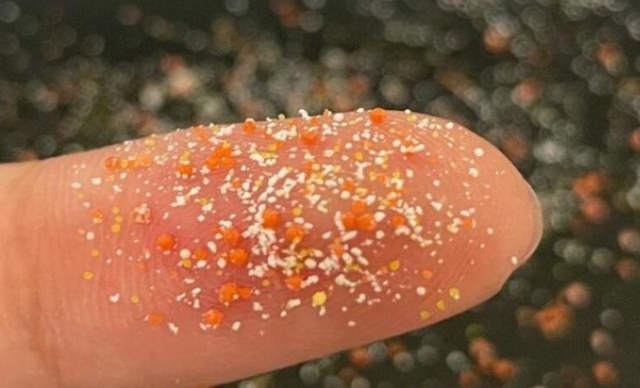
A team of researchers from Guangzhou Medical University and Jinan University in China have solved a problem others had declared unsolvable – how to remove microplastics from drinking water…
Typically, the ‘Chinese Method’ requires no special gear or reactants, or adherence to ultra-close tolerances…
And you’ll be kicking that you didn’t think of of it first!
All you have to do is…
… Boil the water!
You must ensure the water is ‘hard’ – which is to say, possesses significantly-high mineral content.
When the water comes to a rolling boil, minerals such as calcium carbonate. The minerals crystalize on micro-plastic (less than 5 mm) particles and precipitate.
When the water cools, the final step is to simply separate the precipitate from the cleansed water via conventional filtering.
Once the technique is refined, researchers say it’ll be able to reliably remove 90 percent or more of microplastics from average tap water.
They’re everywhere!
Although they’re tiny, microplastics are becoming big news. In the 20 years since scientists first used the term microplastics — a word that describes small plastic particles less than five millimeters in length. Science has been shocked to discover that they’re a growing body of research has revealed how omnipresent they are, floating in our oceans, soil, and even in the human brain.
Just recently, researchers have started to differentiate them from a class of much smaller particles – nano-plastics – which it was thought would require even more-complicated removal techniques.
Now, there’s even some suspicion that the boiling technique can also work on the much smaller nano-particles.
What next?
The next step in refining the boiling method is how to process large amounts of water effectively and efficiently – scaling it up to volumes useful in treating municipal water supplies and commercial bottling operations.
Unfortunately, the boiling method cannot extract micro- and nano-plastics already in or bodies. And in the end, that may turn out to be the most critical plastics issue we have to deal with…
~ Maggie J.