
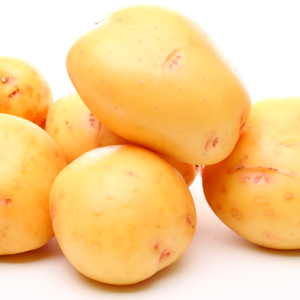
It’s hard to imagine anything 9 million years old – and more or less unchanged over that time. But now, science says we may have been looking at that ‘thing’ and eating it almost every day our whole lives…
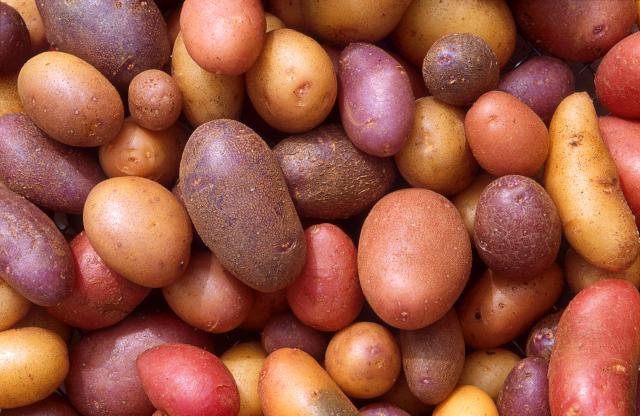
What makes a potato a potato – and not something else? It’s the tubers! That’s what. And now re-searchers say they’ve nailed down the ‘moment’ an unlikely genetic collision caused a mutation that resulted in that now-ubiquitous development…
They’re everywhere…
 Potatoes can be found almost everywhere on Earth today. And almost every culture counts them as part of its ‘native’ cuisine.
But until recently we thought we knew all about how they came about a few thousand years ago in the Andés Mountains that run more or less north-to-south the length of western South America…
The problem is… Researchers now say the potato as we know it actually emerged around 9 million years ago! And that means science has to re-wrote the entire potato story…
In an odd turn of genetic events, scientists tripped over the evolutionary moment in which two species that did not produce tubers cross-bred to produce a new, stable species that did. The two ‘donor’ species were an ancient tomato-like plant and some-thing call an Etuberosum – of which three species were known exist at that time.
And the time was was around 9 million years ago.
What they did
In their quest to trace a direct line of descent from the ancient accidental hybrids that evolved into potatoes as we know them today, researchers analyzed 450 genomes from cultivated potatoes, and 56 of the wild potato species. And in so doing, created an archive of Potato DNA that never existed before, but will now be available to other potato/tuber researchers to consult anytime their research requires it.
“Wild potatoes are very difficult to sample,” says the study report’s first author, DR Zhiyang Zhang of the Agricultural Genomics Institute at Shenzhen, Chinese Academy of Agricultural Sciences. “So this dataset represents the most comprehensive collection of wild potato genomic data ever analyzed.”
What they found
The researchers found that every potato species contained a stable, balanced mix of genetic material from both Etuberosum and tomato plants, suggesting that potatoes originated from an ancient hy-bridization between the two.
This evolutionary innovation coincided with the rapid uplift of the Andes mountains, a period when new ecological environments were emerging. With a tuber to store nutrients underground, early potatoes were able to quickly adapt to the changing environment, surviving harsh weather in the mountains.
The takeaway
Tubers also allow potato plants to reproduce without seeds or pollination. They grow new plants by simply sprouting from buds on the tuber. This trait allowed them to rapidly expand and fill diverse ecological niches from mild grasslands to high and cold alpine meadows in Central and South America.
“Evolving a tuber gave potatoes a huge advantage in harsh environments, fueling an explosion of new species and contributing to the rich diversity of potatoes we see and rely on today,” Huang explains.
My take
Tubers also allow potato plants to reproduce without seeds or pollination. They grow new plants by simply sprouting from buds on the tuber. This trait allowed them to rapidly expand and fill diverse ecological niches from mild grasslands to high and cold alpine meadows in Central and South America.
“Evolving a tuber gave potatoes a huge advantage in harsh environments, fueling an explosion of new species and contributing to the rich diversity of potatoes we see and rely on today,” Huang said.
So… “Hurray!” for Potatoes. And while we’re at it, “Rah! Rah! Rah!” for the potato cousins that produce edible tubers – including yams, taros, sweet potatoes, cassava, and Jerusalem artichokes – on which so many millions of folks around the world rely for sustenance.
~ Maggie J.