
Time for another UPDATE on the Banana Situation. The situation being that a combination of Global Warming and disease is killing off traditional Cavendish banana trees in droves. But there’s good news! A new disease-resistant strain has been developed…
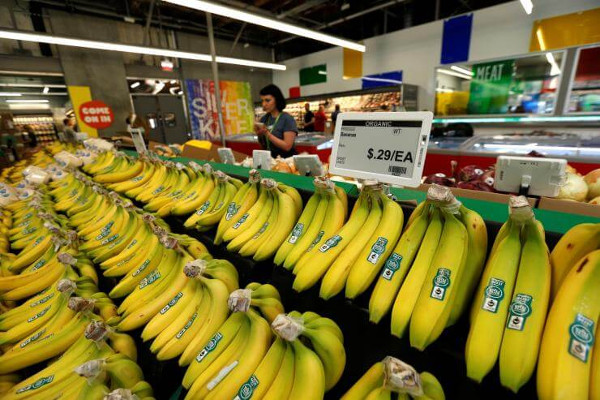 Most supermarkets devote a whole aisle to bananas…
A major milestone…
 Banana giant Chiquita has completed sequencing the genome of the long-awaited Yelloway banana. They’re hailing it as, ‘a foundational scientific breakthrough designed to accelerate the develop-ment of disease-resistant and climate-resilient banana varieties’.
And that’s a very good thing. Because existing banana plantations – mainly growing the traditional Cavendish strain – are dieing off at a frightening pace.
Panama Disease is a devastating soil-borne fungus strain called Tropical Race 4 (TR4). The fungus infects roots, blocks nutrient transport, and causes the plants to rot and die, with no known cure. Black Sigatoka is a dev-astating leaf spot disease affecting banana and plantain plants worldwide.
Options, anyone?
With a cure out of the question, and time definitely being ‘of the essence’, the best solution to the banana crisis quickly became clear.
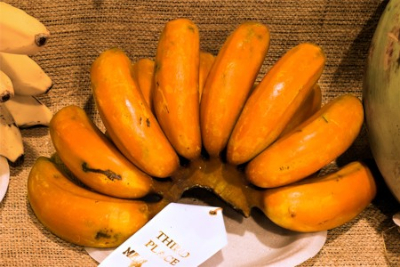 Banana growers and shippers consid-ered several options to replace the traditional Cavendish variety.
One involved moving other banana varieties into the mainstream market. But many of those, though disease-resistant, don’t look or taste at all like the large, bright yellow, firm-fleshed fruit most of the Western world is are aware of. That was considered a no-go from the marketing standpoint.
Start at the beginning
Banana scientists won out with their idea to start, literally from the ground up, developing a new disease-resistant variety that would look and taste like the Cavendish. But would also ship and withstand handling the same way – or better.
Which brings us to the Chiquita breakthrough. They’ve managed to cross-breed a new banana from existing types gathered around the world, which looks very much like the Cavendish and, if anything, tastes sweeter – a definite marketing plus!
Racing the calendar…
The new banana, dubbed the Yelloway, is almost ready to go into ‘production’. Which is to say, Chi-quita and its partners should soon start to grow and multiply the new variety, in anticipation of replacing decimated banana plantations.
It takes an average of 15 to 18 months for a new banana plant to produce its first fruit. That’s not long at all compared to some other fruit species. But the fungals diseases that are killing the Cavendish have been at it for a few years, already…
‘We’ll beat the fungus!’
Fernando Garcia-Bastidas, Head of the Yelloway Banana Breeding Program, says it’s reached a major milestone: “The banana pan-genome allows us to analyze, select, and deploy the most relevant gen-etic material. It dramatically accelerates the development of improved banana varieties resistant to major threats such as TR4 and Black Sigatoka, diseases that endanger the banana as we know it today.”
My take
Bananas have traditionally been one of the most-nutritious, lowest-priced fruits on the market. They’re so popular, and abundant, that most supermarkets devote a whole aisle to them.
And it’s even more important to keep bananas at the forefront of our tropical produce pantheon. They’ll grow in a range of tropical and subtropical conditions, and produce large volumes of nutrit-ion dense food.
Many African cultures rely on bananas as a staple, central to their culinary traditions. We need to keep pushing initiatives such as the Yelloway Project to their logical conclusions. Not just for us, but for the welfare of the whole world, as we head deeper into the Global Warming crisis…
~ Maggie J.