
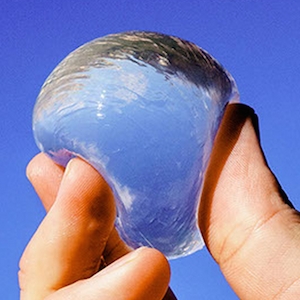
We told you previously about a new ultra-fine mesh material that can pull drinking water out of fog. Now there’s another new substance that can coax drinking water out of even desert-thin air – filtering out most of the pollutants in the process!
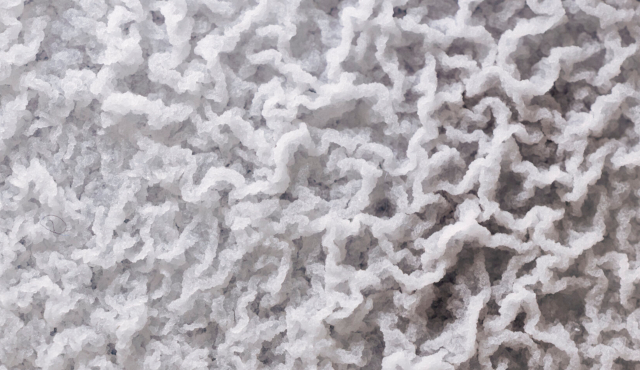 The active component in the hydrogel system crystallizes when dry…
One of the less-talked-about aspects of global warming is the growing shortage of water in popu-lated areas nearer the equator. There’s a major drought in South Sudan right now that’s forced mil-lions of people to move north – a major upheaval.
A Stanford University news release tells us, “One in four people globally lack access to safe drinking water.” And closer to home, “More than half a million U.S. households lack access to running water.” New sources of potable water are desperately needed.
A new solution
But science is working diligently to solve this monumental problem. And a small team at Stanford led by Dr Carlos Diaz-Martin has come up with a system that literally sucks water our of thin air.
It’s called a hydrogel distiller, and it uses materials and technology already in common use.
What it is
Hydrogels have long been known as super-absorbers. They’re the ‘secret ingredient’ in the most effi-cient disposable diapers and feminine hygiene pads.
But they have had a major drawback in drinking water extraction applications until now. The best of them degraded quickly in continuous use making them unsuitable for large scale use.
Now, the Stanford team has created a substance that lasts 6 times longer than previous hydrogels without breaking down.
How it works
At night, the gel naturally and automatically draws water from the air – even in dry desert climates. The new gel can absorb up to 4 times its own weight in water. Then, using solar heat during the day, the water vaporizes and can be condensed and stored as almost 100 percent pure, potable water.
The researchers calculate that a device no larger than a bath towel could produce about 1/2 US gal / 1.9 L per day – enough drinking water to sustain the average person.
The takeaway…
Diaz says his team is now working on improving the performance of its hydrogel with the goal of doubling its water output.
The improvements, “could let us get to a point where we produce water at maybe one cent per litre,” Diaz-Marin says. That would be about 1 percent of the cost of bottled water, and about 10 times the average rate US households pay for tap water. “We see a path to this technology […] perhaps even being competitive with tap water.”
My take
Bravo! Diaz-Martin and team…
Together with the ‘mesh’ method developed by a team from South America, the hydrogel system could revolutionize the water supply picture for dry climate regions around the world.
~ Maggie J.