
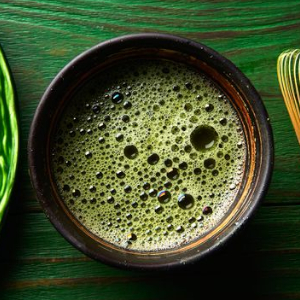
Some of you will have heard about Matcha – the Japanese ‘Green Tea’ that’s been a staple of healthy eating regimes there for centuries. Conventional and traditional physicians agree it’s good for you. So it’s probably time we filled in the Western knowledge gap about Matcha!
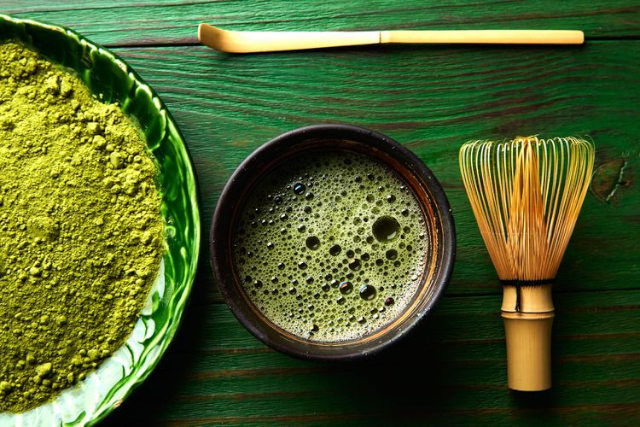
Let’s get out of the way, before we go any further, the difference between Matcha and the conven-tional tea used in the ancient and beloved Japanese Tea Ceremony….
A world of difference
There is some significant resemblance between the two ‘teas’ as they sit before you on the shelf in their respective jars… But that’s about as far as it goes.
Conventional Japanese tea is very much the same as the stuff we’re used to: dried leaves from the Asian Tea bush, crushed and steeped in boiling water. It’s usually steeped for a very brief time, using a small bamboo whisk, according in a detailed ceremonial procedure. Tradition dictates it be sipped slowly fro small, ceremonial ‘bowls’. Conventional Japanese tea is noted for its subtlety and floral notes. And it may be clear and all be all but colourless in the cup. And the steeped leaves are dis-carded after brewing.
Matcha, on the other hand, employs the whole leaf, ground into a powder and whisked aggressively into a foamy, aromatic, grassy-flavoured brew that is usually served in large bowls.
What it delivers
Both conventional Japanese Tea and Matcha deliver some caffeine, though somewhat less than other teas and most coffees. Neither is likely to cause you any lost sleep. At the same time Matcha contains concentrated beneficial compounds which you’ll find hard to say ‘no’ to…
“Thanks to the whole-leaf consumption, you’re getting the complete nutritional profile of the tea plant, since you’re essentially drinking its benefits rather than just steeping them,” says Angelo Falcone, MD, an integrative medicine physician and founder of Dignity Integrative Health and Wellness.
“This translates to approximately 10 times the nutritional content of regular green tea for the same volume,” Falcone points out.
Matcha delivers loads of antioxidants anti-inflammatories, and polyphenols which are claimed to boost cardio, gut, cognitive and immune functions. It’s a high bar to set, but advocates insist that Matcha clears it, and then some.
A few caveats…
Falcone warns, Matcha may have drawbacks or some potential fans. It can cause mild stomach discomfort. And its caffeine content can interfere with sleep if you aren’t used to the stimulant through previous conventional tea or coffee consumption.
Two or three cups a day is an ideal amount for most adults to consume to reap optimum benefits. Falcome recommends starting with one cup and raping yo a maximum of three over three or 4 weeks.
If you want to drink matcha for health reasons, forget the stuff they serve in fancy coffee shops. It’s likely to contain little actual matcha and a lot of ‘window dressing’. Also, get yourmatcha powder from reputable Asian food and Health food’ outlets. They’ll probably be selling higher volumes than other sources, and their stock will be fresher and more potent.
My take
Ive tried matcha. And I wasn’t too impressed with the flavour or texture experience. I can report that the flavour is less ‘grassy’ than the popular description of the aroma might suggest. Which is a plus. But I know I would have difficulty polishing off up to 3 large bowls of the stuff every day, in perpetu-ity. I sensed immediately that, if I made the commitment, I would ultimately fail to come through on it.
But that just proves the old proverb, that a person has to know their own limits – in all things. Matcha may not be good thing for me. But it still might be a great thing for you!
~ Maggie J.