
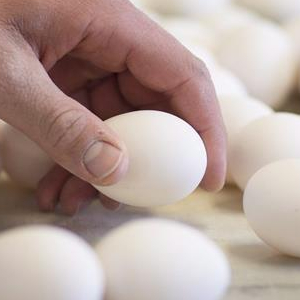
Maybe not the biggest news you’ll read today, from the Foodsphere. But an eye-opener, just the same. And I’m tempted to test MIT’s findings on how eggs get cracked. Yes, there’s a real, grown-up reason for them ‘bruising all that hen fruit’…
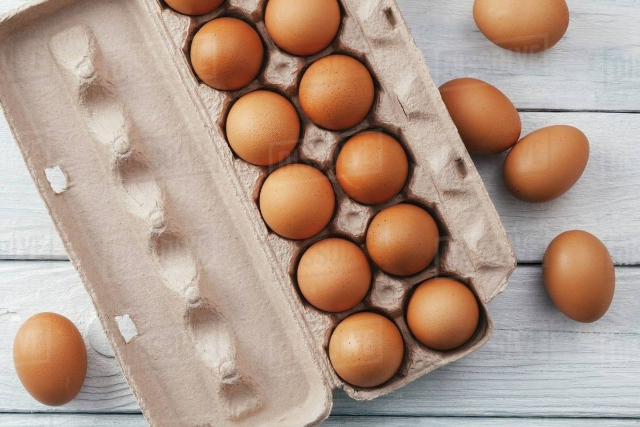
Massachusetts Institute of Technology (MIT) researchers wanted to confirm, once and for all, what the most vulnerable surface of an egg is. And at least some of them were as surprised as I was at their findings…
Big Endian or Little Endian?
That debate goes all the way back to 1726, when legendary Irish satirist Jonathan Swift published his groundbreaking political satire, Gulliver’s Travels.
One of the ridiculous debates that divided the people of Lilliput was whether to go with the King and open soft-boiled eggs at the little end, or back the opposition and decapitate them at the big end. Swift used the egg-breaking disagreement as a metaphor for political and social division.
As I recall, Swift offered no label for egg-cracking centreists – whom we would call middle-of-the-road compromisers. As then-President George W. Bush declared for the cameras, on the steps of the Capitol after 911: “You’re either with us or against us!”
The ‘middle’ model
Sorry, George… But the folks at MIT may have just proved you – and Swift – wrong. After painstaking lab experimentation, researchers say they’ve determined that the best way to protect an egg from cracking if it’s dropped or tapped is to apply the pressure – or impact – from the side, not at either end.
The IT team wanted to generate an empirical answer to the age-old question – via indisputable direct observation.
“The fun started when we thought we would get one result and then we saw another,” said MIT’s Hudson Borja da Roch, who helped run the experiments.
According the study report, more than 200 eggs were dropped, from various heights, onto various surfaces, in various orientations before the team declared it’s conclusions.
What they found
Researchers first compressed eggs both vertically and horizontally. But they found that they cracked under the same amount of systematically-applied stress either way.
However… When dropped ‘from three short heights up to 0.4 in. / 10 mm’, the eggs dropped hori-zontally cracked less.
“The common sense is that the egg in the vertical direction is stronger than if you lay the egg down. But they proved that’s not the case,” noted materials scientist Marc Meyers with the University of California, San Diego (UCSD), a third-party observer who was not directly involved with the study.
The takeaway
If you want to protect eggs most effectively in these times of shortages and soaring prices, you need to redesign commercial and retail egg trays to accommodate their cargoes so that the eggs lie on their sides. Which as actually the main reason the MIT team undertook the experiments in the first place.
My take
It’s not likely that the egg industry is going to go all-out and redesign its classic, vertical product packaging. In climate-controlled egg warehouses, and supermarket displays, every bit of footprint space counts.
But it could mean the difference between the thrill of victory or the agony of defeat on the right bar bet…
~ Maggie J.