
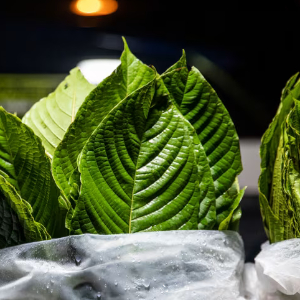
It’s not well-known in the West – yet. But interest in Kratom is increasing. And the psychoactive ‘herb’ is already used by an estimated 2 million Americans. The Centres for Disease Control (CDC) say addiction and overdoses are shooting up at an alarming rate…
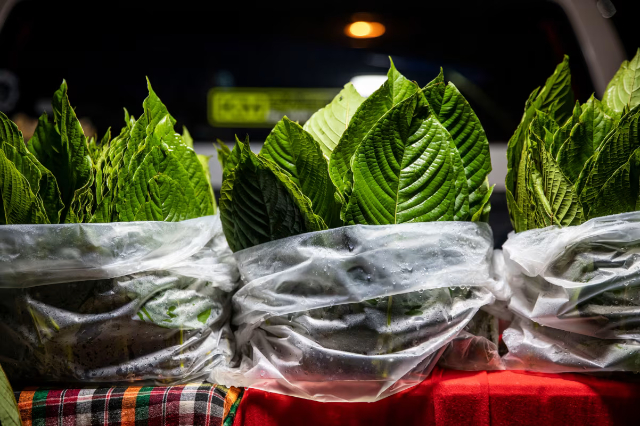
It’s the leaf of the tropical Mitragyna speciosa tree, native to Southeast Asia. It’s chewed, crushed or brewed up into a tea to get a high. And the CDC is sounding an alarm as calls to Poison Control Cent-res about Kratom have shot up by 1,200 percent over the past 10 years…
Time to take note
Some US states have already banned Kratom. But in those that have not, the unregulated substance can be bought almost everywhere. Legally. And in a country where cannabis is not universally legal, that’s attracted the attention of ‘high flyers’.
The US Food and Drug Administration notes, Kratom is not, “lawfully marketed in the U.S. as a drug product, a dietary supplement, or a food additive in conventional food.” That’s because it’s not fed-erally regulated.
New report
The CDC recently published a new report on the Kratom situation by researchers at the University of Virginia (UVA).
Team leader Dr Chris Holstege warns, “The data reflects a concerning trend.”
What they did
Researchers analyzed recorded Kratom incidents reported to the CDC via regional Poison Control Centres across the US between 2015 and 2025.
What they found
“During the decade reviewed, more than 14,400 Kratom exposures were reported. Most involved men, particularly men in their 20s and 30s. But there were also dramatic increases in reports involving people aged 40-59, suggesting more people are trying and using Kratom.”
“In 2025, 60 percent of the […] exposure reports had ‘serious medical outcomes’,” the authors note. And half of those incidents required hospitalization.
The takeaway
A news release issued alongside the report recommends: “Based on their findings, poison experts are calling for increased scrutiny of Kratom, as well as for public health education campaigns to high-light that using it can have serious – even deadly – consequences, especially in combination with alcohol, medicines or illicit drugs.”
Declared addictive
The CSDC has declared Kratom an addictive substance. Previous studies at the University of Florida have demonstrated the herb can have both stimulative and sedative effects. And interacts directly with the brain. In some cases, Kratom overdoses have been treated successfully with Naloxone, the antidote used by first responders to counteract narcotic ODs.
My take
Kratom is officially addictive and can have ‘serious medical consequences’ including death.
In the US, Alabama, Arkansas, Indiana, Rhode Island, Vermont, and Wisconsin have already banned it.
Elsewhere, it’s banned in Denmark, Latvia, Lithuania, Poland, Romania, Sweden, Bulgaria, Norway, Argentina and Chile. And Canada has prohibited its sale ‘for ingestion’.
So isn’t it time for all Western jurisdictions get off their collective duffs and at least regulate, if not ban the stuff?
~ Maggie J.