
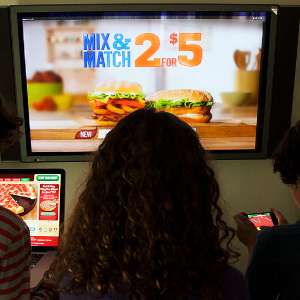
Junk food marketing is very successful, driving sales for many brands every year. Constant exposure to energy-dense, nutrient-poor foods leads children to develop life-long dietary habits that are hard to break.
Because of junk food marketing, around 40% of calories children now consume come from sugar and saturated fat. Additionally, 60% of children eat too little fruit, while 95% eat too few vegetables.
Long-lasting impact
Why is it that a short ad can have such a lasting impact? It’s all mind games. According to Cancer Re-search UK, watching any food content makes children (and adults alike) feel hungry, pushing them to snack between mealtimes. It usually also impacts their food preferences, as marketing teams spend a lot of time and money making their products look delicious on screen.
Serious health issues
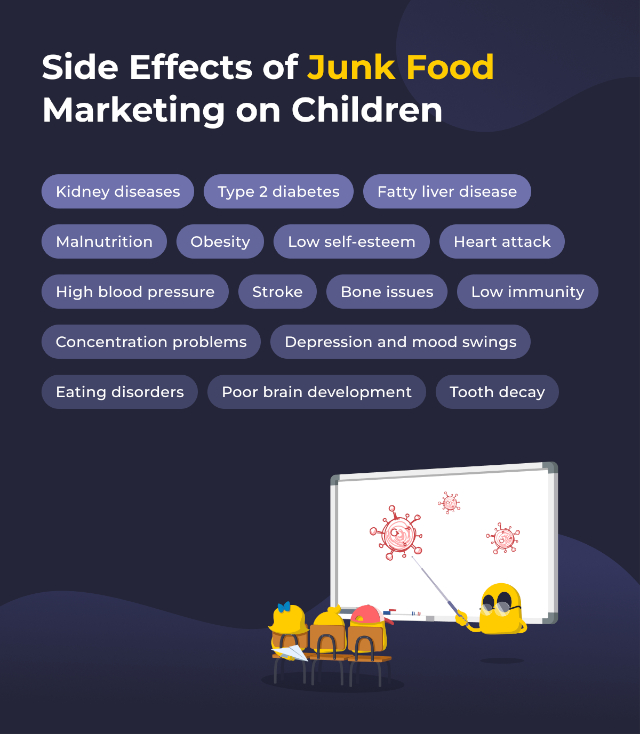
As a result of the increased calorie consumption, children are putting on a concerning amount of weight and facing many serious health issues. Lack of proper nourishment and high intake of sugar, salt, and fat lead to tooth decay in one in three children. As a result, more children have to undergo surgical extractions.
Too much junk food can lead to far worse consequences, such as high blood pressure, bone issues, diabetes, fatty liver, and even a stroke or heart attack, which until recently were considered ‘old age’ issues.
Not just kids
It’s not just school-age children and teens who are at risk. Some parents begin exposing their child-ren to junk food when they’re as young as five months.
According to a UNICEF study, almost two in three children between six months and three years of age don’t get appropriate nutrition due to overconsumption of junk food. This can heavily stunt their de-velopment and lead to poor brain growth, slow learning, low immunity, risks of increased infections, and, in some cases, death.
These effects are most likely to last a lifetime, too. Research shows that around 55% of children who suffer from being overweight or obesity retain their weight into adulthood, as it’s difficult to change your dietary habits. Childhood obesity also carries long-term mental health issues, such as low self-esteem, depression, mood swings, and eating disorders.
Tomorrow: What are Our Leaders Doing?
***
Are you enjoying this new series on Junk Food Advertising targeted to kids? It’s a first here on the Fab Food Blog. Let us know what you think. If our faithful readers approve, we’ll bring you more such in-depth reports in the future! ~ Maggie J.
***
This is Part VI of a new series – a first for the Fab Food Blog – produced by The Digital Dinner Table, which is solely responsible for all content and opinions expressed.
For information, contact:
Michael Cooper
Digital Literacy & Youth Health Advocate