
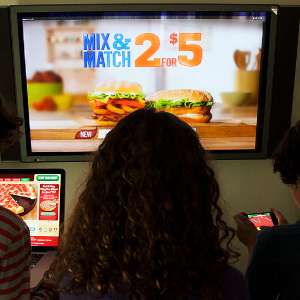
The US is the most food-obsessed market globally, with the 12th highest obesity rate in the world. More than 80% of food advertising in the country promotes fast food, sugary drinks, and unhealthy snacks, with companies spending $10 billion on junk food ads every year. But the issue affects almost every other corner of the world…

Junk Food Marketing Across the Western World
United States
The US government allocates a budget of around $1 billion to promote healthy lifestyles and prevent chronic diseases. That a mere one tenth of the collective global expenditure on junk food advertising…
While all children and teens are vulnerable to junk food marketing, research suggests marketers often target families from poor socioeconomic backgrounds as well as Hispanic and Black commun-ities. In 2021, Black children viewed up to 21% more food and beverage ads than their White peers, while food companies increased their budgets allocated for Spanish-speaking advertisements. This marketing focus stems from the fact that children of colour are less likely to not have access to affordable healthy options.
Another issue with junk food marketing in the US is the misinformation present in a lot of ads. Many companies use celebrity or athlete endorsements, perpetuating the idea that their products are healthier than they are. They also normalize consuming higher amounts of junk food while watching sports or TV, further contributing to the growing obesity pandemic.
Some junk food ads in the US don’t even have anything to do with promoted products – for example, the infamous Carl’s Junior ad where Paris Hilton was washing a car in her bikini. It seems that mark-eters focus more on making brands memorable instead of actually showcasing their products. This is why many US junk food ads have been banned in countries like New Zealand, the UK, or Australia.
These advertising strategies contribute to the higher rates of obesity, diabetes, and heart disease among children in the US. The issue is compounded by the fact that children, particularly teenagers, have difficulty resisting the short-term rewards offered by junk food, despite understanding that these foods are unhealthy. This continuous exposure to junk food ads is shaping children’s norms and expectations about what foods are acceptable to eat regularly.
United Kingdom
Back in 2020, the UK government announced an ambitious plan to halve child obesity in the country by 2030, but we’re yet to see anything put into place. Despite promising announcements, including banning junk food advertisements online and on TV before 9 p.m., every bill proposed so far has been delayed. This means the obesity rate continues to rise, while cries for help grow louder than ever.
Junk food brands are thriving in this environment. Research shows that the top 18 producers of con-fectionery, chips, and sugary drinks pay over $190 million on advertising every year. That’s around 30 times more than what the UK government spends on promoting healthy eating and exercise. The push for junk food marketing is clearly visible through statistics as experts estimate children under 16 saw 15 billion junk food ads online in 2019, compared to “just” 700 million in 2018.
Families from poor socioeconomic backgrounds feel the lack of care the most. Just like in the US, junk food marketing in the UK focuses heavily on more deprived areas. Public Health England reports the poorest areas in England usually have up to five times more fast food hotspots. They offer food that’s up to three times cheaper than healthy alternatives, heavily influencing people’s food choices and encouraging unhealthy eating habits from a young age.
European Union
The trend of marketing junk food to children carries on through the EU member countries, with many now dealing with an obesity rate of over 30%. The most affected countries lie in the southern part of the continent, such as Spain, Greece, and Italy. The issue is so severe that the Mediterranean diet is being called a thing of the past as countries around the sea famous for healthy eating practices are now facing a huge obesity issue due to Westernized dietary habits.
Despite these growing issues, the EU still doesn’t restrict junk food marketing in its member states. Instead, it relies heavily on voluntary regulations, hoping junk food brands themselves will follow their conscience and code of conduct. While stricter food regulations in Europe make junk food a bit “better” than in the US, it’s still causing a huge surge in childhood obesity and related health issues.
Looking at specific member states, the problem ranges in severity. Children in Germany view an average of 15 junk food ads every day. Though it seems like a lot, it’s nothing compared to Spain, where young viewers see around 24 ads daily — amounting to almost 9,000 commercials viewed in a year. These statistics only cover traditional advertising, so this number is likely much higher if you include influencer promotions and endorsements.
Tomorrow: Long-term Affects of Too Much Junk Food…
***
Are you enjoying this new series on Junk Food Advertising targeted to kids? It’s a first here on the Fab Food Blog. Let us know what you think. If our faithful readers approve, we’ll bring you more such in-depth reports in the future! ~ Maggie J.
***
This is Part V of a new series – a first for the Fab Food Blog – produced by The Digital Dinner Table, which is solely responsible for all content and opinions expressed.
For information, contact:
Michael Cooper
Digital Literacy & Youth Health Advocate