
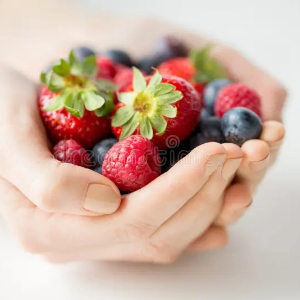
If you’ve never heard about this Japanese cultural tradition, you’re not alone. But it’s becoming better known outside the island nation as the world concentrates more on sustainability and avoiding waste. Because a lot of what we toss is just ‘too good to waste’…
 Mottainai is more than just food conservation. It’s about the whole world!
It’s called ‘Mottainai’, and it’s a concept the Japanese apply in the same way we would think of ‘Thrift. But Mottainai goes much further than that. And it could be just what Westerners need to help them brave the coming, inevitable transition to a world with less food and more people to share it.
What it is
“Mottainai, which can be approximately translated as ‘what a waste’ or ‘too good to waste’, is the Japanese ideal of respecting the intrinsic value of resources by avoiding waste,” Apartment Therapy food writer Katherine Laubscher explains. “Namiko Hirasawa Chen, founder and creator of Just One Cookbook, an English-language Japanese recipe site, describes mottainai as ‘a way of thinking and a belief system to be more mindful of the resources that you have, consume, and share with people around the world, and to avoid being wasteful’.”
What it involves
“At school [in Japan] we were taught to use a resource as if it’s the last one, even if there’s plenty,” Chen recalls. Her parents drummed into her to use ‘only what she needed to get the job done — and no more.
Food was a central focus: “I was taught from a very young age that throwing away any food on my plate was a big no-no. That would be mottainai, or wasteful. We were taught to take only as much food and beverage as we could eat or drink — even water!”
How it works
Laubscher, a fifth-generation Japanese American, says she had been looking for opportunities to rediscover traditional cultural practices and enjoy the timeless benefits they bring to life. Those benefits, she notes often extend beyond the emotional to the practical – as with mottainai.
She recently engaged in an experiment applying mottainai to her daily routine, with a focus on her food shopping and meal prep habits. And a practical purpose.
“My slapdash approach to meal planning (impulse-buy produce, fail to use it in time, order takeout) caught up with me in the form of my ballooning grocery budget. More importantly, I just did not feel good about my choices.”
Thus did Laubscher embark on a journey of discovery: “Last week, I decided to experiment: I spent one week intentionally practicing mottainai with my food. I looked to Chen’s example to set my course for the week.”
She started making shopping lists. She bought only what she would need to make the dishes she planned. She avoided ‘specials’ and impulse buying.
And, “Lastly, I aimed to use at least one item languishing in my fridge, freezer, or cupboard for every meal.”
What she discovered
After a quick inventory of the pantry, fridge and freezer, Laubscher said she was ‘amazed’ at how much food she already had on hand. She was also surprised at how shopping strategically reduced her grocery spending. “In the end, I spent $127 less on groceries than the previous week.”
Her takeaway
“Ultimately, my venture into mottainai was the wake-up call I needed,” Laubscher admits. “Yes, the amount of money I saved was gratifying (and a little alarming), but more importantly the experiment made me acutely aware of how complacent I’d become in my grocery shopping. While inflation was certainly a factor in my bloated grocery bill, it was clear that my own ambivalence towards waste was a major contributor.”
My take
Reading Laubscher’s recollections about her childhood, I started remembering lessons my Mom and Dad tried to teach me when I was little. Anyone whose parents lived through the Depression as teen-agers, like my folks did, brought with them to their own families a host of tips, tricks and hacks that could save money, time and effort when doing just about anything around the Home.
I just got caught up in the new abundance of consumer goods and marketing ploys used by manu-facturers and retailers that blossomed in the 1950s and 60s – my ‘formative’ years.
Mom and Dad are both gone, now. And I never properly thanked them for everything they taught me about how to get along in life. I hope they’re watching and listening… Wherever they are…
~ Maggie J.