
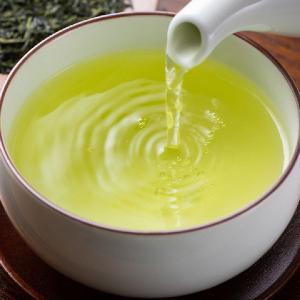
‘Tea’ is understood to be both a meal and a beverage among most Westerners. Some – notably of British extraction – consider it indispensable, both functionally and socially. Thus, Tea enjoys a unique place in our kitchens – and the history of the world…

Anyone who lives in a country or culture influenced by the sweeping onslaught of British colonialism, which began in the 18th century and continued through most of the 19th, can be excused for con-sidering Tea a cultural ‘given’…
History unclear?
But I’ve discovered that a majority of folks we might expect to know all about the heritage of the beverage know hardly anything about it at all. And that’s a shame. It’s a great story!
To understand the importance of Tea, we need to understand how essential the custom of tea drinking was in colonial times. That is, when the Brits first came face-to-leaf with the caffeine-carrying bush.
A medicinal spice?
Prior to the British ‘conquest’ of India and Ceylon (now Sri Lanka), Tea was known to come from a number of the so-called ‘Spice Islands’, as well as Japan. But it wasn’t until the Brits came to live in Central Asia that Tea became ‘the overlord’s best friend’.
That was because the natives taught the heat-intolerant British that drinking tea would help them counter the stifling heat of their adopted land. It’s a simple ‘technology’, the same principle on which modern air conditioners work: Drinking hot tea causes you to perspire. The sweat evaporates cooling your skin. And that, in turn, helps lower your body temperature, by cooling the blood that circulates just under the skin.
Conversely, back in Britain, a hot cup of tea was soon found to be an ideal way to banish the chills of a cold, rainy day. Of which most Brits will tell you they have more than their fair share.
To round out the picture… Tea contains caffeine, which is addictive in the same way that opiates and alcohol are. Which ensured that the ‘Tea’ habit, once acquired, was not likely to die out.
Tea, tea, and more tea…
As a sidelight… When a traditional fourth meal became entrenched in the daily routine of British life during Queen Victoria’s reign, it was just naturally called ‘Afternoon Tea’.
“Afternoon tea was introduced in England by Anna, the seventh Duchess of Bedford, in the year 1840,” Historic UK tells us. “The Duchess would become hungry around four o’clock in the afternoon. [But] the evening meal in her household was served fashionably late at eight o’clock, thus leaving a long period of time between lunch and dinner. [So] the Duchess asked that a tray of tea, bread and butter […] and cake be brought to her room during the late afternoon. This became a habit of hers, and she began inviting friends to join her.”
The great leveler
Another historic achievement claimed by tea was that it became known as ‘the Great Leveler’ in British society. By the end of the Victorian Era, everyone from Dukes to ditch diggers stopped for a bun or sandwich and a ‘cuppa’ at 4 o’clock every afternoon.
On the other hand, let’s not forget that the American Revolution started over King George III’s refusal to withdraw a crushing tax on Tea he proclaimed over his widespread empire to pay for Britain’s European Wars in the late 18th an early 19th Centuries.
My take
To put things back in perspective…
Both of my grandmothers – one British, the other Scottish – insisted that the greatest virtue a cup of tea could bestow was to give a ‘lady’ something to do with her hands while sitting, gossiping with her friends..
But I dare say that no other commodity has had a more profound influence on Western Society than Tea. Except, possibly, petroleum or Plutonium…
~ Maggie J.