
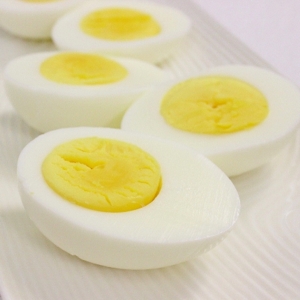
I’ll bet you think you know the healthiest way to prepare eggs. But today, we may have some surpris-es for you! Because virtually everyone now knows that frying eggs is a no-no, we’re concentrating on boiling, scrambling – and poaching…
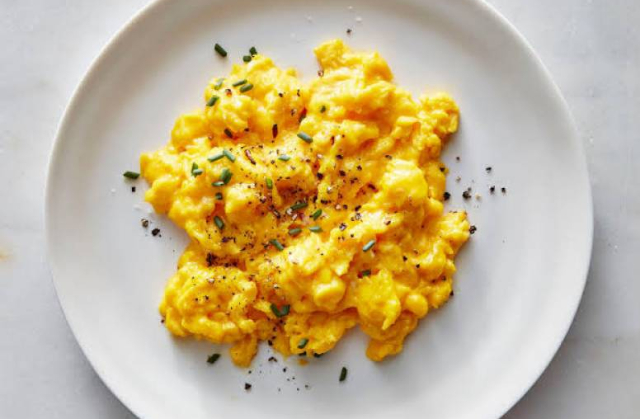
Aside from a small minority of folks who are sensitive or outright allergic to eggs, almost everybody loves the ancient and venerable Hen Fruit. Eggs are healthy, too. But HOW healthy depends on what happens to them after they leave the shell and before they go into your mouth…
Eggs are ‘nutrition dense’
Nutrition-dense foods are those that have substantial amounts of essential nutrients – the ones your body can’t make enough of by itself. The ones you have to get from food. Eggs, happily, are not only cheap and abundant, but deliver significant amounts of many vitamins, minerals and bio-substances we all need.
They’re high in protein, offer a complete source of essential amino acids, and are rich in B vitamins, vitamin D and A, and choline. They’re also a source of healthy fats. And they’re filling, in spite of being low in calories.
Eggs have been vindicated
It used to be that pretty much everybody in the medical professions considered eggs unhealthy. They are high in cholesterol. But relatively recent research has confirmed that dietary cholesterol (which you get from food) does not correlate directly to serum (blood) cholesterol. Which means you can pretty much eat as many eggs as you want without fear of raising your risk of cardio-pulmonary disease.
Eggs can be prepared in many ways
There are a few classic egg-prep techniques, the results of which can be used in myriad dishes ad-dressing a multitude of circumstances.
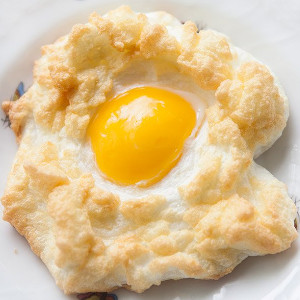 The most popular include: frying, scrambling, boiling and poaching. But they can also be baked, or whipped into omelets and soufflés. Then there are quiches and tortas and frittatas. And let’s not overlook ancient and venerable forms such as coddled and baked eggs. Not to mention… The unique, fluffy, festive treat known as Egg Clouds (pictured, left). They all have their own time and place, and context.
Focus on fundamentals
Frying is inherently unhealthy, and we’ve already covered that egg prep method heavily in this space. So, we’ll look, one-at-a-time, at the three remaining ‘core’ egg tech-niques. It turns out that many of the more exotic egg dishes are actually off-shoots or evolutions of these fundamental three:
Boiling
Boiling – more properly, ‘simmering’ – is without a doubt the most basic form of egg prep. You add no fats or oils, or other ingredients. You don’t even remove them from their shells. There are many opin-ions about how and how to hard-boil eggs. We’ve spotlighted our faves in this space in the past.
The one issue that haunts boiled eggs as a concept is… Whether soft-boiled eggs are safe. After all, they do have liquid yolks. And runny yolks are especially prized by some of the most elevated egg connoisseurs. Google AI found: “Achieving the perfect soft, runny, or ‘jammy’ egg yolk typically re-quires boiling eggs for 6 to 7 minutes after placing them into already-boiling water. For a runnier yolk, 5–6 minutes is ideal, while 7–8 minutes creates a thicker, jammy consistency.”
Poaching
Poached eggs also make use of a pot of simmering water. The main difference between boiled and poached is, you remove the eggs from their shells. The way you place them into the water is critical to success. The trick is to keep the Egg in one roughly circular piece while doing so. The pros say to add a Tbsp. / 15 ml of white vinegar to the water to help coagulate the whites. And create a ‘whirl-pool’ vortex in the water into which you can quickly pour the whole egg. The rotary motion will help keep the egg in the desired shape until its outer layers are set.
Scrambling
Scrambled eggs are made simply by beating the whites and yolks of several eggs together, sometimes with milk or cream, and stirring them in a skillet with a little canola or other ‘healthy’ oil, at low to medium-low heat until they form moist, fluffy ‘curds’. You can add any number of veggies or proteins. But your basic scrambled egg – without even the dairy addition – is one of the most wholesome ways you can cook an egg…
My take
The key health issue to remember about eggs is: The eggs themselves are great for you. It’s what you cook them in and what you put on (or in) them that can make them very naughty, indeed!
One key point…
One key point that should have come home to you while reading this post is that all egg dishes are really just variations on the basic egg prep techniques…
You can talk all day, about all the supposed ins and outs of cooking eggs. But I’ve found that mast-ering the Big 4 techniques – frying, boiling, poaching and scrambling – will get you at least 85 percent of the way to ovular perfection. And the only way to master egg prep is to practice, practice, practice!
~ Maggie J.