Is it a new economic Indicator? Restaurant workers have turned up among the ‘least confident in their employers’ across America, in a new survey. Apparently, Fast Food workers are worried about the future of their industry…
 The Flippy 2 AI-driven, autonomous fry maker. Capable of replacing three human workers…
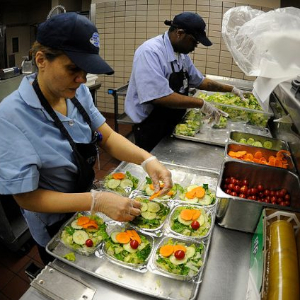
Who better to gauge the stability of their industry than the folks at the ‘bleeding edge’? Those interfacing with its customers? If anyone is tuned-in to the realities of the Fast Food sphere, it’s them…
No smoke or mirrors
Frontline workers in any business are always the best equipped to comment on the State of the Industry. They get the opinions and indicators from the ‘outside world’ directly from the masses. No blinders. No filters. No smoke or mirrors. None of the factors that can pollute business intelligence on the way up a corporate ladder.
Thus it is – at least I believe it is – that the recent survey by SwitchOnBusiness (SOB) reveals some substantive as well as fascinating indications.
Who’s ‘least confident’?
SOB analysts have identified a select few ‘key findings’ which they believe define the overall econo-mic situation:
- NVIDIA has the highest employee confidence, with 92.67 percent of employees rating their business outlook as positive.
- Meta Platforms (Facebook) employee confidence has risen the most in the past year (+18.16 percent).
- Only 18 percent of Uber employees in Missouri and New Jersey rate the company’s outlook as positive — a tie for the lowest confidence in a big company in a particular state.
- Meta, Amazon and Netflix are among the ten tech companies where employee confidence is at its lowest.
The Fast Food sector
Key to the theme of this particular news outlet is the finding that two of the biggest Fast Food employers in the US – and the world – are in the Top 10 for lowest employee confidence.
Almost half of Starbucks and McDonald’s employees spoke out about their discomfiture to pollsters, at 48.00 and 46.93 percent, respectively.
As well, the world’s leading soda maker, Coca Cola, tallied a 12.33 percent decrease in employee confidence over the past year. That landed Coke just 8 places from the top of the ‘Biggest Decrease in Positive Business Outlook’ list.
Reflects board room outlooks
Of major interest to me is, the frontline workers – in the fast food industry, at least – reflect pretty closely those of the boardroom big wigs. The industry-leading minds have been aware, for several years now, that the Fast Food sector has just about choked itself out. Sales have plateaued or fallen. Profits have begun to suffer. In a big way, for some players.
The big, familiar names in the business have all trumpeted grand new visions of their restaurants (and business models) of the future. They’re hoping the roof won’t fall in before those revolutionary changes can be implemented. But the COVID crisis, implacable inflation and declining consumer buying power have all impacted Fast Food.
AI to the rescue?
The major Fast Food chains are all relying on AI-driven data handling and closely linked robotic order fulfillment systems to reduce the costs. The worst of those, unpredictable and punishing burden represented by human employees. The implications are clear.
‘Un-manned’ space shots cost one tenth of the expense involved in putting people on a rocket for the same trip. It’s exactly the same in Fast Food.
Cut the people from the equation and you can say goodbye to rising wages, income tax bookkeeping, employee benefits, and operating costs associated with meeting labour standards.
Machines don’t need holidays, don’t ask for raises, and have predictable operating and maintenence costs. And you can depreciate the capital investment on your corporate taxes.
So it’s no wonder…
… Fast Food employees who’ve thought about the future are less than sanguine about their own futures in the industry.
~ Maggie J.