
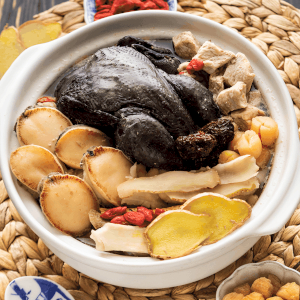
There’s so much solid, serious food news to report these days, it’s not surprising that tales of high-end dining excess have fallen by the wayside. But a new report says, ‘exclusive’, luxe restos are thriving – even those selling soup for $168 a bowl!
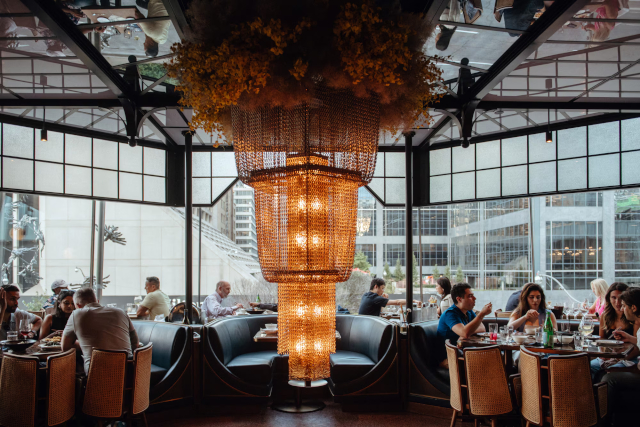 Motts 32, Toronto: One of the new breed of exclusive, stratospheric downtown eateries…
I’d almost forgotten they ever existed. My days are taken up with scouting and reporting what I con-sider serious food news: unremitting high supermarket pries, nutrition crisis among the growing legions of poverty-stricken ‘ordinary folks’. The runaway pace of climate change…
Hidden excess
But amid all that, there’s a side to ‘dining culture in our time’ that’s being neglected by the popular press. I refer to the cadre of new glitzy, high-end restaurants that appear to be thriving – though their menu prices are positively stratospheric. A recently-opened Toronto ‘spot’ that has a simple bowl of soup on its menu priced at $168.
As an analyst treating her patient for stress and depression brought on by food price craziness might ask… “How does that make you feel?”
“Mad as hell!” is increasingly the response non-billionnaires are offering.
Case study…
The author of a recent Globe and Mail feature story on the new ascendance of ultra-pricey high end restaurants seems to agree with ‘the rest of us’. They have names such as Jade, Nobu, Aera, Kasa Moto and Sadelle’s – totally foreign to the ears of the masses. Nevertheless, every large city still has a firm-ly rooted coterie of such joints.
describes that eye-popping $168 bowl of soup, at Motts 32, as: “Buddha Jumps Over the Wall, […] which features abalone, sea cucumber, dried scallop, fish bladder and bamboo pith.” (See photo, top of page.)
Other menu examples Mintz cites include: “Nova Scotia lobster har gow [Chinese dumplings] ($28 a piece), Peking duck with sturgeon caviar ($480), and braised whole dried fish maw ($650).”
But why?
Mintz speculates – with good reason, I admit – that, “When you’re wining and dining a finance-industry executive within a purple velvet-lined corner of the restaurant called the ‘Boom Boom Room’, you want to be able to say to your client, ‘This is a $168 bowl of soup. This is how much we care about you.’” And you don’t actually have to utter a single word.
But how can these places stay open? How many times can how many Toronto’s billionnaires treat how many financiers to such royal repasts?
How?
“Since the pandemic, fine dining is on the rise again,” say”s Alex M. Susskind, Professor of Food and Beverage Management at Cornell University.
“Restaurant guests are always price sensitive,” he agrees. But when it comes to luxury products, they tend to be less […] sensitive. There is definitely an increased demand for luxury experiences. So fine dining has seen a resurgence. That’s what drives it.”
If he say7s so. This whole ‘resurgence’ might as well be taking place on Mars, as far as the great mass of folks who struggle to eat every day are concerned.
My take
I honestly feel that the carefree rich, who could care less if folks like us can afford a decent meal, inadvertently ‘rub our faces in it’, when some media outlet or other runs a story on how well the 1 Percent’s fave eateries are doing. In the middle of a global food crisis. But they are totally insulated from our daily realities.
Billionaires like Galen Westin, who rules the Loblaw’s empire, don’t know and don’t care what we at the bottom of the income pyramid are going through. Their recent, historically consistent, utterly shameless actions clearly show they’re solely concerned with maintaining their outrageous profit margins.
Even if it’s clear to everybody else that the ultra-rich folks who virtually own the food retailing system just don’t care about the people who buy their goods.
Time for a change
As I’ve said many times before, with ownership comes responsibility. The supermarket giants must step up and end the food price crisis. Even – Galen forbid! – at the cost of a portion of their greed-driven profits.
As the old Depression Era pop tune Ain’t We Got Fun? rambles on, “There’s nothing surer: The rich get richer and the poor get poorer…” And it goes on to suggest, “In the meantime, in-between time, ain’t we got fun?” The answer is a resounding ‘No!’
~ Maggie J.