
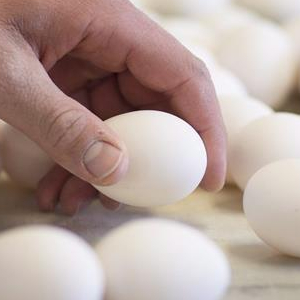
One of the most-Googled topics recently has been a simple question with a complex answer: “What can I use in place of eggs, in my recipes, during the egg price and availability crisis?” I keep seeing the same suggestions. But…
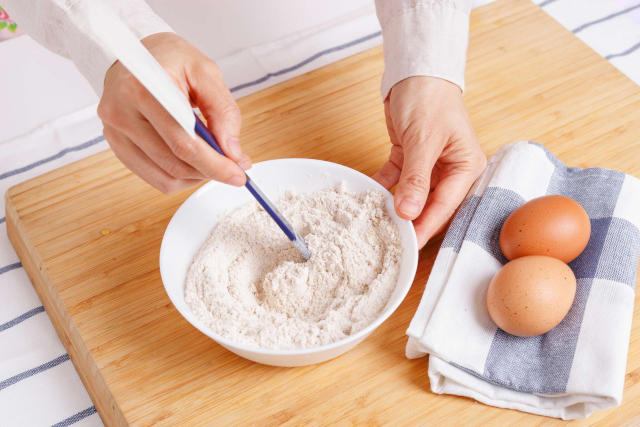
Nutritionists, dieticians and professional cooks have all been offering their opinions on how to sub-stitute for eggs and what to use as egg replacements. As with all such questions, there are many opinions. And many pros and cons attached to every egg alternative suggested.
The conventional line
There are three factors that need to be addressed when choosing a potential substitute or replace-ment for eggs in a recipe. And the situation is complicated by the fact that there is no single direct replacement for the unique and wondrous ‘henfruit’…
Nutrition
If the primary role of the egg(s) in your recipe is to provide a nutrition-dense dish, your goal in choosing a replacement should be to come up with a medley of ingredients that provide a rich source of clean protein plus a good source of the essential nutrients eggs deliver.
Various ‘eggs-perts’ suggest high-protein foods such as Chick Peas or a style of Tofu of appropriate viscosity. Products such as these have an added advantage in that they are like ‘blank canvasses’ colour-, flavour-, and texture-wise. They can be made to fit into almost any dish you need to sup-plement with protein in place of eggs.
This may take some fiddling and juggling. But the effort will be worth it. And you’ll be adding to your ever-growing trove of cooking wisdom and lore as you go.
Function
One common function of eggs in a recipe is to provide moisture. There are lots of options there, from plain water, to fruit juices, to milk or yogurt. Even applesauce or mashed bananas! Again, aesthetics will be a concern, to some degree or another, in your choice of an alternative. Fruits and juices, for example all deliver bold, perhaps inappropriate flavours and sweetness to dishes you want to use them in.
Structure
Perhaps the most difficult dimension in which to choose a replacement for eggs in a recipe is where the physical structure of the dish depends on one or another of the special properties of eggs.
One of these is the foaming/whipping/air retention abilities of egg whites. It turns out, there are ways to replace beaten eggs in recipes, though results may not be as reliable as using real egg whites.
A comprehensive discussion…
One of the best, most comprehensive discussions of egg substitutions I’ve yet found is by ABC News Online food corespondent Kelly McCarthy.
She goes into the properties of various common – and not-so-common – egg alternatives available to all home cooks. You may want to bookmark this ultra-useful page!
 My take
With all that said, always remember: the most common function for which you’ll want to find an egg substitute is leavening baked goods. Especially when you’re making anything in the ‘cake’ family. The hard-and-fast rule there is, one teaspoon / 5 ml of baking soda plus 1 tbsp. / 15 ml of plain white vinegar = one ‘standard’ Grade A Large egg.
In my view, there’s a whole spectrum of applications in which you may want to substitute another ingredient or ingredients for eggs. Some of these applications will be perfectly suited to substitution, with the appropriate replacement ingredient(s). In others, it will be almost impossible to find a suitable or effective substitute. If you’re confident a known substitute will work in your recipe, plunge ahead and use it. Otherwise, the best advice I can give is, cook something else, rather than risk failure.
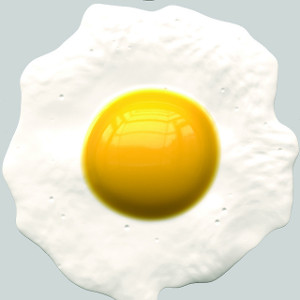
And always remember… There are situations where nothing but a real, fresh Grace A Large egg will do! (See photo, above left…)
~ Maggie J.