
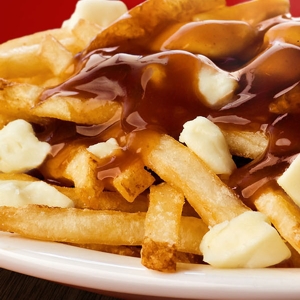
As a Canadian, whose family goes back five generations in the dairy/cheese business, I think I can claim ‘expert’ status in a discussion about the ‘prefect’ poutine. After all, Cheese is the key ingredient in the iconic Canuck dish… Isn’t it?
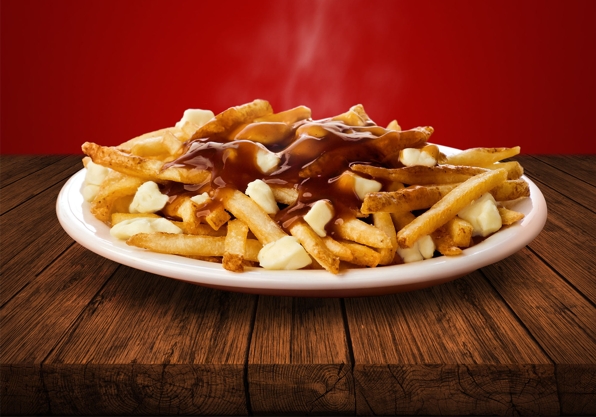
Therein lies the rub. Folks have never been able to agree on the order of precedence of the 3 simple ingredients in Classic Poutine. Do fries come first? Are the cheese curds most critical? Or is it the old-school ‘diner-style’ brown gravy that makes the dish what it is?
I took up the torch on this issue again just recently when I ran across a broadcast bit from CTV News. The intrepid reporter asked a diverse mix of folks at the annual Windsor (just across the river from Detroit) Poutine Feast, the weekend before last, what their secret was perfect Poutine. Their comments made me laugh and cry by turns.
What the young folks said
Yes, the reporter talked only to what appeared to be folks under 30. I have a problem with that aspect of the vid all by itself. The older folks, who know real poutine and have had long, loving re-lationships with the dish, would, in my estimation, have had more and richer opinions to share. But they weren’t allowed to weigh in.
Too bad. Because any one of them might have pointed out that the dressed-up, spiced-up, top-pinged-up poutines we see all over the place today are not what Poutine was ever supposed to be.
Spoiler Alert
The real secret to perfect poutine is to stick with the three original ingredients. To prepare each in the approved way. And to combine them in the proper order.
The Fries
The fries must be made from big old Russet Potatoes that have been aged in a ventilated bin in a cold, dry, dark place. The skins must be left on. Then, they must be soaked on ice cold water for at least half an hour to condition the surface starch. This promotes to the crispiest exterior while preserving a fluffy interior. They must be fried in canola or peanut oil that has not been used to fry any other food.
The Cheese Curds
These must be as fresh as possible. Get them as early as you can on the day they were made. Every cheese making insider knows that really fresh curds respond like gummy bears when you squeeze them, and squeak when you bite into them. Day-old curds, or those that have been refrigerated, lose a significant portion of their flavour, get tough, and develop an undesirable starchy texture.
The Gravy
This is a point on which many poutine makers stumble. They make fancy gravies, with all kinds of spices and flavourings. Nothing could be further from the truth. Real poutine demands plain, old, diner-style brown gravy. Beefy, a little salty, and as thick as maple syrup. You want it to stick to the fries, not run down into the bottom of the bowl. You can still get the real deal in a can or jar, made by Heinz or Campbell’s. Or as a dry mix, which is what most diners and other quick service restos still use.
Final Assembly
You have to start with the fries, of course. Not too many, and not compacted into the bottom of the bowl – just lying loose. Then comes a 2 oz. / 60 ml ladle of the gravy, drizzled all over the bowl, hitting every fry. Finally – and this is where most less-than-expert poutine chefs fail – you must add the curds on top of the gravy, not under it. Place the curds evenly across the field, not touching, but with at least one knob of curd in contact with every top-layer fry. It’s important to provide enough curd to ensure you get a bite of cheese in every forkful.
My take
The real secret is, no single ingredient is key to making poutine. Perfect poutine is, and always has been, the combined essence of all three ingredients which – perhaps with divine direction – come together in a heavenly whole.
The KISS principle definitely applies when making poutine. And the classic recipe must be adhered to. If you make it any other way – varying in any particular from the approved method as prescribed above… It’s just not REAL poutine!
~ Maggie J.