
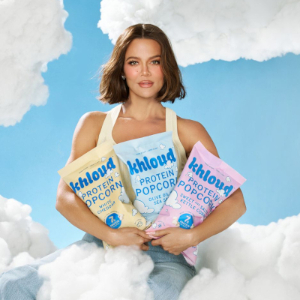
Researchers say most of us don’t have to worry about whether they’re getting enough protein every day. And added-protein processed foods may be a waste of money. Unless you’re a body-builder!
 Added-protein products may just be a waste of money –
unless you’re a body builder or malnourished…
They saw an opportunity and they jumped on it. It’s kind of like a reverse food fad that results in processed food makers bragging that their products are ‘LOW’ or ‘LOWER’ in fat, salt or sugars. And the scientific and medical worlds have done as much or more than anybody else to promote the myths behind the labels…
Not the only such ‘cheat’
As many of you who follow this newsblog will know, processed food makers started subtly changing their formulations some time back so they could, through legal and technical loopholes, slap health claims on their labels.
But health and wellness advocates were quick to point out that ‘natural’ and ‘organic’ claims were empty words depending on their context. And other descriptives, such as ‘LOW’ or ‘LOWER’ (in fats, sugar, salt or carbs) could be just as meaningless, since those are ‘relative’ terms.
Protein pushers saw similar opportunity
A little later in the game, the folks who push ‘health’ foods and ‘clean eating‘ started pushing the ‘need’ to choose leaner and/or less-processed foods improved health and wellness. At the same time, they blurred he distinction between ‘Wellness’ and ‘Well being’. Which are not, and never have been the same thing.
Taking the lead from outspoken opponents of red meats and processed/ultraprocessed foods, protein pushers started to talk about foods that once were good sources of ‘high quality’ protein, but were now getting the goodness milled out of tehm before they reached your plate. Which led to claims that some key foods needed ‘healthy’ proteins added back to them, to ensure that we all enjoyed a ‘clean’, balanced diet.
Experts now say…
The truth, the real experts maintain, is quite different.
“Adding protein to foods is very beneficial — for the profits [on] that food,” says Federica Amati, nutrition lead at Imperial College London and head nutritionist at the health science company ZOE. “It is not based on health. It is not backed by science.”
The truth is, yes, protein is essential a long list of body functions and processes. But most of us can get along just fine without supplements.
“Because protein is so important, our body has adapted really well to making sure that it can reassemble and change the building blocks of these amino acids to make sure we have what we need, as long as we’re eating adequate amounts of food,” Amati said.
What you need
According to a recent overview by AP contributor Maria Cheng, “the World Health Organization recommends that healthy adults get about 0.4 grams of protein per pound of body weight (0.8 grams of protein per kilogram of body weight). That’s roughly 60 grams for men and 50 grams for women per day, based on body weights of 165 pounds (75 kilograms) for men and 143 pounds (65 kilograms) for women.”
In most rich countries, the average adult gets far more than that, Amati points out. Protein deficiencies are mostly seen in malnourished people on subsistence diets in poorer countries, she adds.
‘Normal’ everyday sources
Bridget Benelam, a nutritionist with the British Nutrition Foundation, told Cheng, “it’s important to get proteins [which the body can’t make] from different foods, like dairy, fish, beans, nuts, vegetables and meat.
Even vegetarians and vegans, are getting enough of the kinds of protein they need on a daily bases. That’s partly because they’re generally more aware of the nerd to balance their nutritional intake to ensure they get adequate protein.
My take
AP’s experts get the last word…
“Unless you have a specific health issue that requires you to have more protein, most people in countries like the US and the UK do not need more,” Benelam asserts.
“People should scrutinize the ingredient list[s] of protein-enriched products to make sure they aren’t loaded with sugar and fat,” Amati adds. ““If you’re worried about your body composition and muscle strength, you have to lift (heavier) weights and give your body a challenge,” Amati suggests. “Eating a protein bar is not going to help.”
~ Maggie J.